Main Street Historic District

The National Park Service has not published a boundary polygon for this district; the map shows the listed properties inside it and the district's reference point.
Why it's listed
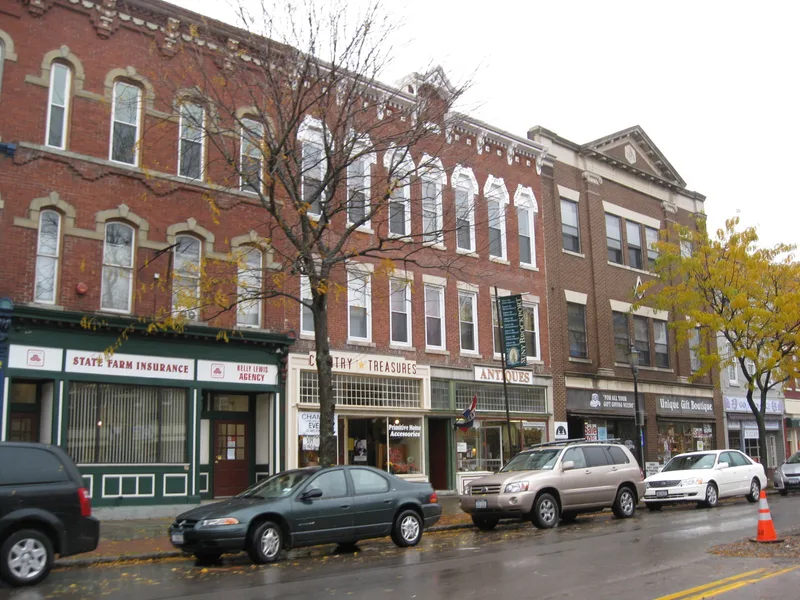
Brockport's Main Street Historic District preserves the commercial heart of a village of about 8,100 people in western Monroe County. The ten-acre district runs along Main Street from the Erie Canal, takes in the western half of Market Street and includes one property on King Street. Most of its buildings are attached brick or stone structures in the Italianate manner, built over the latter three quarters of the nineteenth century. They typically have storefronts below, offices on the second floor and apartments or storage above. Large display windows, recessed entrances, cast-iron or stone piers and ornamented cornices give the rows a cohesive look. The district also holds a 1940 post office, a large church and a 1915 steel lift bridge with a 1913 concrete tower on the canal. The village grew where the Erie Canal crossed Lake Road, and the canal was extended to Brockport in 1823. The upper floors in particular retain a high level of historic integrity.
Machine-generated summary. This summary was generated by a language model from the official nomination document and has not been reviewed line by line by an editor. It may contain errors. Check the source document before relying on any detail. Source: nomination document (PDF) · catalog entry. Generated October 2026 (model claude-sonnet-5-5, prompt v1.0-2026-10-29).
| Styles | Greek Revival, Gothic, Italianate, Classical Revival, Italian Renaissance, Moderne |
|---|---|
| Areas of significance | Architecture |
| Acreage | 8.5 |
| Boundary source | not published |
| Full listing page | Main Street Historic District (property record) |
What listing means for this property
This is a historic district. Buildings within its boundary are either contributing (they add to the district's significance) or non-contributing. Owners of contributing income-producing buildings can claim the 20% federal rehabilitation tax credit; homeowners should look at state credits. National Register districts impose no design review by themselves; a local historic district ordinance, if one exists, does (the difference explained).
General information, not legal or tax advice. Rules change; confirm with your State Historic Preservation Office or a qualified adviser.