Main Street Historic Distrct

Why it's listed
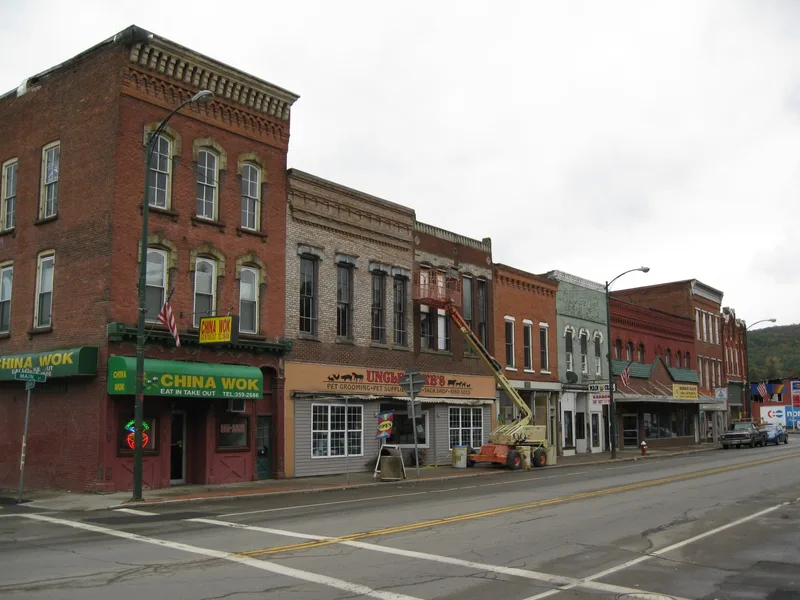
Addison's Main Street runs south from the Canisteo River through the village's historic commercial center, and the district covers the continuous rows of storefront buildings on both sides. Thirty contributing buildings and outbuildings date from about 1840 to 1934. Most are two- to three-story brick blocks built in the 1870s and 1880s, many with Italianate details such as arched windows, bracketed cornices and decorative brickwork. A row of seven buildings on the west side went up in 1880 after a fire destroyed much of that side of the street, and four were designed by Elmira architect Eugene Gregory. Cast iron storefront pilasters and pressed metal cornices, made by firms in Elmira and Horseheads, survive on several buildings. The Stevens Block of 1883 is the district's only High Victorian Gothic example, with multicolored masonry. Although some storefronts have been modernized, the upper floors and the consistent scale and setbacks keep the street's historic commercial character.
Machine-generated summary. This summary was generated by a language model from the official nomination document and has not been reviewed line by line by an editor. It may contain errors. Check the source document before relying on any detail. Source: nomination document (PDF) · catalog entry. Generated October 2026 (model claude-sonnet-5-5, prompt v1.0-2026-10-29).
| Period of significance | c. 1840-1934 |
|---|---|
| Styles | Greek Revival, High Victorian Eclectic, High Victorian Gothic, Italianate, Early 20th Century American Movement, Commercial/No Style |
| Areas of significance | Commerce, Architecture |
| Acreage | 5.4 |
| Boundary source | NPS cultural-resource GIS polygon |
| Full listing page | Main Street Historic Distrct (property record) |
What listing means for this property
This is a historic district. Buildings within its boundary are either contributing (they add to the district's significance) or non-contributing. Owners of contributing income-producing buildings can claim the 20% federal rehabilitation tax credit; homeowners should look at state credits. National Register districts impose no design review by themselves; a local historic district ordinance, if one exists, does (the difference explained).
General information, not legal or tax advice. Rules change; confirm with your State Historic Preservation Office or a qualified adviser.