Madison Barracks

Why it's listed
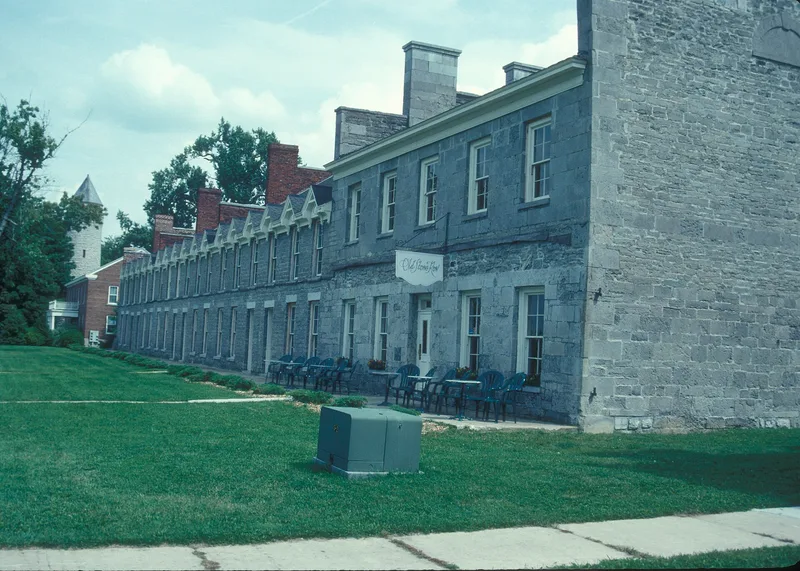
Madison Barracks is a military post of about 113 acres on Lake Ontario at Sackets Harbor, New York, used continuously from 1812 until World War II. Its buildings show three main construction periods. Limestone officers' quarters known as the Stone Row, a hospital, a bakery and warehouses date from 1816-19. Brick quarters, barracks, a guard house and a rusticated stone water tower followed in the 1890s, and brick and concrete block structures were added in the 1920s. Most buildings face two adjoining parade grounds. A stone arch bridge over Mill Creek, built around 1812, still carries traffic. The post was ordered built in 1815 by General Jacob Brown and named for James Madison. President James Monroe visited in 1817, and Ulysses S. Grant served there as a young lieutenant. It was listed because the grounds and buildings preserve a continuous record of the nation's northern frontier defense and of military architecture across more than a century.
Machine-generated summary. This summary was generated by a language model from the official nomination document and has not been reviewed line by line by an editor. It may contain errors. Check the source document before relying on any detail. Source: nomination document (PDF) · catalog entry. Generated October 2026 (model claude-sonnet-5-5, prompt v1.0-2026-10-29).
| Period of significance | 19th Century (the form also notes a 130-150 year span of military use from 1812) |
|---|---|
| Styles | Richardsonian detailing on the Mess Hall and Barracks; colonial revival for the 1939 barracks; otherwise not formally classified |
| Areas of significance | Military, Politics/Government, Architecture |
| Acreage | 113 |
| Boundary source | NPS cultural-resource GIS polygon |
| Full listing page | Madison Barracks (property record) |
What listing means for this property
This is a historic district. Buildings within its boundary are either contributing (they add to the district's significance) or non-contributing. Owners of contributing income-producing buildings can claim the 20% federal rehabilitation tax credit; homeowners should look at state credits. National Register districts impose no design review by themselves; a local historic district ordinance, if one exists, does (the difference explained).
General information, not legal or tax advice. Rules change; confirm with your State Historic Preservation Office or a qualified adviser.