MacDougal-Sullivan Gardens Historic District

The National Park Service has not published a boundary polygon for this district; the map shows the listed properties inside it and the district's reference point.
Why it's listed
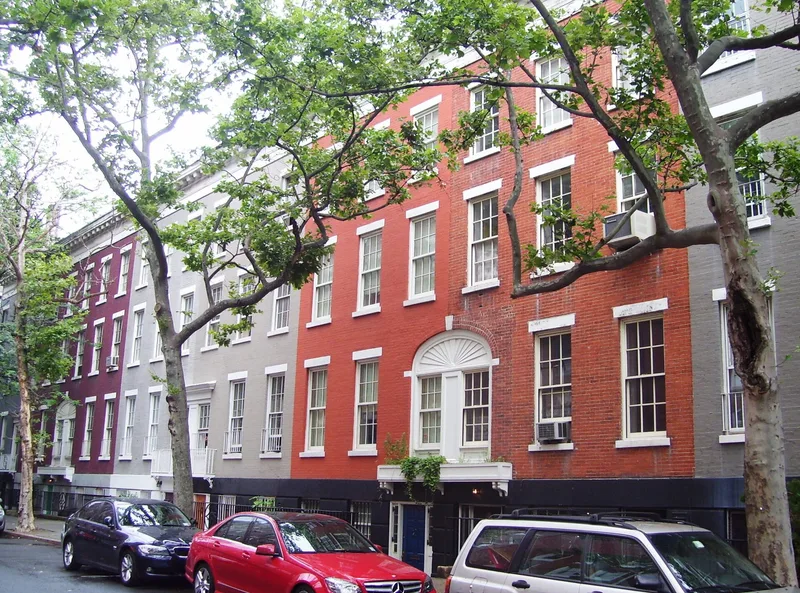
Twenty-two rowhouses on MacDougal and Sullivan Streets, a few blocks south of Greenwich Village in Manhattan, form this small district. The MacDougal Street row went up in 1844 in the Greek Revival style, and a similar row on Sullivan Street followed in 1850. The Low family estate owned the block for 125 years, and in 1920 a real estate corporation bought it. Architects Francis Y. Joannes and Maxwell Hyde remodeled both rows in the neo-Federal style. They removed the stoops, added basement entrances and fan-shaped window frames, and installed iron balconies and planter boxes, while keeping the original cornices and windows. The interior of the block became a communal green, with a small private garden for each house, flagstone paths, benches and a play area. The district matters for the survival of the Greek Revival rows, their reuse as early rental housing set against nearby tenements, and a shared garden that was unusual in 1920. The houses remain private residences.
Machine-generated summary. This summary was generated by a language model from the official nomination document and has not been reviewed line by line by an editor. It may contain errors. Check the source document before relying on any detail. Source: nomination document (PDF) · catalog entry. Generated October 2026 (model claude-sonnet-5-5, prompt v1.0-2026-10-29).
| Period of significance | 1900- |
|---|---|
| Styles | Greek Revival, remodeled in neo-Federal style |
| Areas of significance | Community Planning and Development, Landscape Architecture, Architecture |
| Acreage | 1 |
| Boundary source | not published |
| Full listing page | MacDougal-Sullivan Gardens Historic District (property record) |
What listing means for this property
This is a historic district. Buildings within its boundary are either contributing (they add to the district's significance) or non-contributing. Owners of contributing income-producing buildings can claim the 20% federal rehabilitation tax credit; homeowners should look at state credits. National Register districts impose no design review by themselves; a local historic district ordinance, if one exists, does (the difference explained).
General information, not legal or tax advice. Rules change; confirm with your State Historic Preservation Office or a qualified adviser.