Locust Lawn Estate

Why it's listed
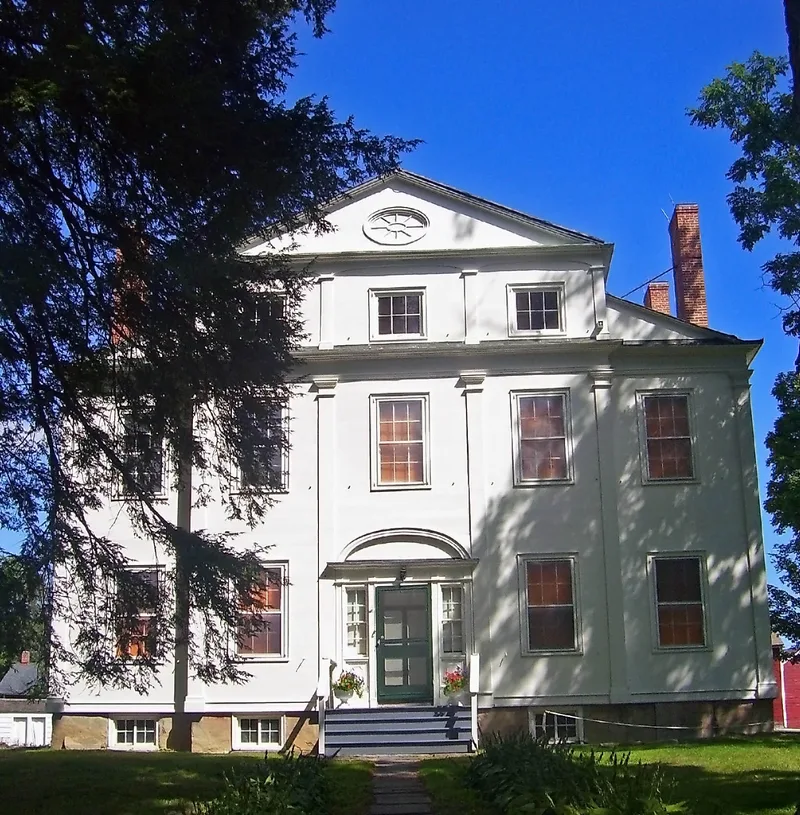
Locust Lawn Estate, southeast of Gardiner on Route 32, combines two houses from different centuries. The older is a one-and-one-half story stone house built in 1738 by Evert Terwilliger on land from the Freer Patent. It served as an inn, and the Terwilligers also ran two mills nearby on the Plattekill. Josiah Hasbrouck bought the land in 1794. A Revolutionary War captain and later a congressman, he built a three-story Federal style mansion by 1814, modeled on Virginia houses he had seen in Washington. Cromwell of Newburgh designed it, with marbelized plaster walls, and Hendrick Schoonmaker built it. The stone house became a tenant house, and a slaughterhouse, smokehouse, carriage house and woodshed were added in the 19th century. The property stayed in the Hasbrouck family line until 1958, when it was given to the Huguenot Historical Society. It is now open to the public and includes an eighteen acre bird sanctuary.
Machine-generated summary. This summary was generated by a language model from the official nomination document and has not been reviewed line by line by an editor. It may contain errors. Check the source document before relying on any detail. Source: nomination document (PDF) · catalog entry. Generated October 2026 (model claude-sonnet-5-5, prompt v1.0-2026-10-29).
| Styles | Federal (Hasbrouck House); 18th century stone rubble house (Terwilliger House) |
|---|---|
| Areas of significance | Commerce, Transportation, Politics/Government, Architecture |
| Acreage | 24 |
| Boundary source | NPS cultural-resource GIS polygon |
| Full listing page | Locust Lawn Estate (property record) |
What listing means for this property
This is a historic district. Buildings within its boundary are either contributing (they add to the district's significance) or non-contributing. Owners of contributing income-producing buildings can claim the 20% federal rehabilitation tax credit; homeowners should look at state credits. National Register districts impose no design review by themselves; a local historic district ordinance, if one exists, does (the difference explained).
General information, not legal or tax advice. Rules change; confirm with your State Historic Preservation Office or a qualified adviser.