Ligonier Point Historic District

Why it's listed
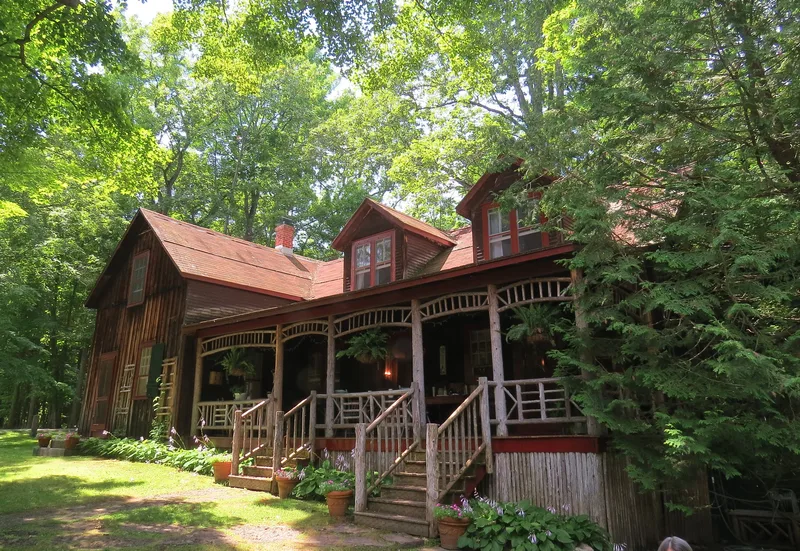
Ligonier Point Historic District occupies 79.60 acres on Willsboro Point, where the Clark family built a stone, boat and farm enterprise along Lake Champlain during the nineteenth century. Two homesteads anchor the district: Old Elm, a Greek Revival house with a Chazy limestone main block and a frame wing later used for a creamery, and Scragwood, a house of several building phases decorated with rustic and Gothic Revival details. Beyond the houses lie the main quarry and two smaller ones, an orchard, and the foundations of the quarry village, including a company store, carpenter's shop and blacksmith's shop. Chazy limestone from here was shipped by barge down the lake and through the canal system. In 1870 about 225 men worked the quarry. Lewis Clark designed the derricks and steam equipment, and S.W. Clark & Company, formed in 1854, managed the business. The district totals 34 contributing and 6 non-contributing resources.
Machine-generated summary. This summary was generated by a language model from the official nomination document and has not been reviewed line by line by an editor. It may contain errors. Check the source document before relying on any detail. Source: nomination document (PDF) · catalog entry. Generated October 2026 (model claude-sonnet-5-5, prompt v1.0-2026-10-29).
| Styles | Mid-Nineteenth Century: Greek Revival; Late Victorian: Gothic Revival; Other: rustic |
|---|---|
| Areas of significance | Architecture, Commerce, Industry |
| Acreage | 79.3 |
| Boundary source | NPS cultural-resource GIS polygon |
| Full listing page | Ligonier Point Historic District (property record) |
What listing means for this property
This is a historic district. Buildings within its boundary are either contributing (they add to the district's significance) or non-contributing. Owners of contributing income-producing buildings can claim the 20% federal rehabilitation tax credit; homeowners should look at state credits. National Register districts impose no design review by themselves; a local historic district ordinance, if one exists, does (the difference explained).
General information, not legal or tax advice. Rules change; confirm with your State Historic Preservation Office or a qualified adviser.