Liberty Village Historic District

Why it's listed
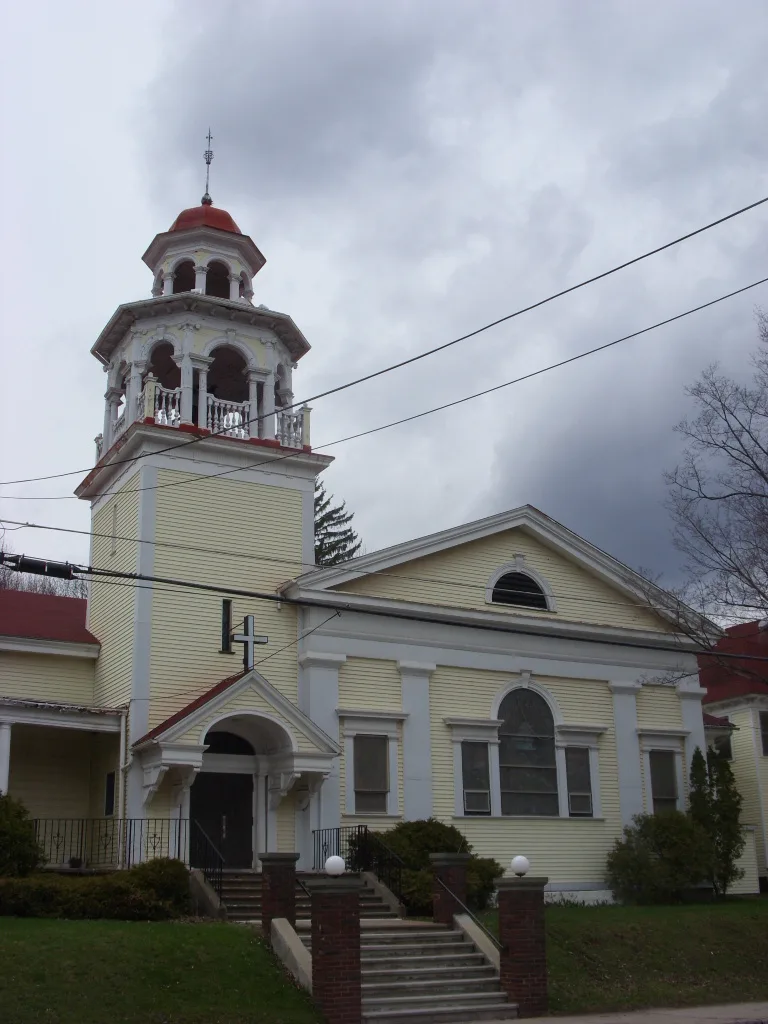
Twelve buildings along North Main, Academy and Law Streets make up this small district in the Village of Liberty, New York. The group mixes religious, commercial and residential uses and ranges from modest vernacular houses to a Gothic Revival villa, a Romanesque bank building and a Greek Revival church with an 1890 tower and belfry. The village grew as an agricultural center, was incorporated in 1870, and gained a tourist trade after the railroad arrived in 1873, which prompted building around the turn of the century. Highlights include the Hillig Studio of 1914, with its tile facade, built for photographer Otto Hillig; the Keller house, the oldest surviving residence in the village; and the United Methodist Church, whose Akron-plan interior is described as the finest in the area. The district was listed because it preserves a period streetscape that has largely disappeared from the surrounding, more modern village.
Machine-generated summary. This summary was generated by a language model from the official nomination document and has not been reviewed line by line by an editor. It may contain errors. Check the source document before relying on any detail. Source: nomination document (PDF) · catalog entry. Generated October 2026 (model claude-sonnet-5-5, prompt v1.0-2026-10-29).
| Styles | Mixed: Greek Revival, Gothic Revival, Romanesque, and vernacular |
|---|---|
| Areas of significance | Architecture |
| Acreage | 3 |
| Boundary source | NPS cultural-resource GIS polygon |
| Full listing page | Liberty Village Historic District (property record) |
What listing means for this property
This is a historic district. Buildings within its boundary are either contributing (they add to the district's significance) or non-contributing. Owners of contributing income-producing buildings can claim the 20% federal rehabilitation tax credit; homeowners should look at state credits. National Register districts impose no design review by themselves; a local historic district ordinance, if one exists, does (the difference explained).
General information, not legal or tax advice. Rules change; confirm with your State Historic Preservation Office or a qualified adviser.