Kripplebush Historic District

Why it's listed
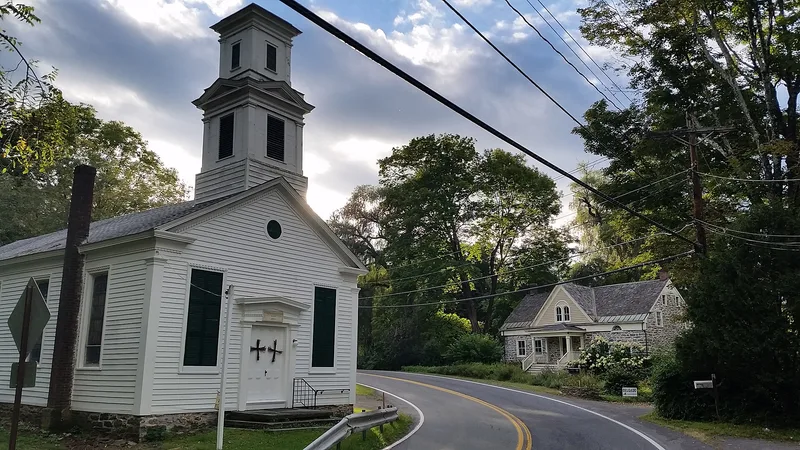
Kripplebush is a small hamlet near the base of the Catskill Mountains in Marbletown, Ulster County, New York. It grew up where local roads met beside Kripplebush Creek and a hillside called Snake Hill. The district holds 33 contributing buildings. Four are one-and-a-half-story stone farmhouses, including the Ephraim Chambers House of about 1772 and the Hornbeck House of about 1790. The rest are mostly plain frame buildings from the 19th and early 20th centuries: a Methodist church of 1857, a district schoolhouse, a lodge hall, a former hotel, former stores, and a carriage and wagon manufactory. Barns, sheds and other outbuildings also survive. Many commercial buildings were later converted to houses, which helped keep the hamlet's layout and appearance intact. The district was listed because its structures and land-use patterns remain so well preserved and show how a rural hamlet developed around farming, small-scale manufacturing and trade. Today the hamlet is residential, and the old schoolhouse serves as a historical museum.
Machine-generated summary. This summary was generated by a language model from the official nomination document and has not been reviewed line by line by an editor. It may contain errors. Check the source document before relying on any detail. Source: nomination document (PDF) · catalog entry. Generated October 2026 (model claude-sonnet-5-5, prompt v1.0-2026-10-29).
| Styles | Hudson Valley Stone; Early Republic/Federal; Mid-19th Century/Greek Revival; Late Victorian/Queen Anne, Italianate; Early 20th Century/Craftsman |
|---|---|
| Areas of significance | Architecture |
| Acreage | 40 |
| Boundary source | NPS cultural-resource GIS polygon |
| Full listing page | Kripplebush Historic District (property record) |
What listing means for this property
This is a historic district. Buildings within its boundary are either contributing (they add to the district's significance) or non-contributing. Owners of contributing income-producing buildings can claim the 20% federal rehabilitation tax credit; homeowners should look at state credits. National Register districts impose no design review by themselves; a local historic district ordinance, if one exists, does (the difference explained).
General information, not legal or tax advice. Rules change; confirm with your State Historic Preservation Office or a qualified adviser.