Knapp, Timothy, House and Milton Cemetery

The National Park Service has not published a boundary polygon for this district; the map shows the listed properties inside it and the district's reference point.
Why it's listed
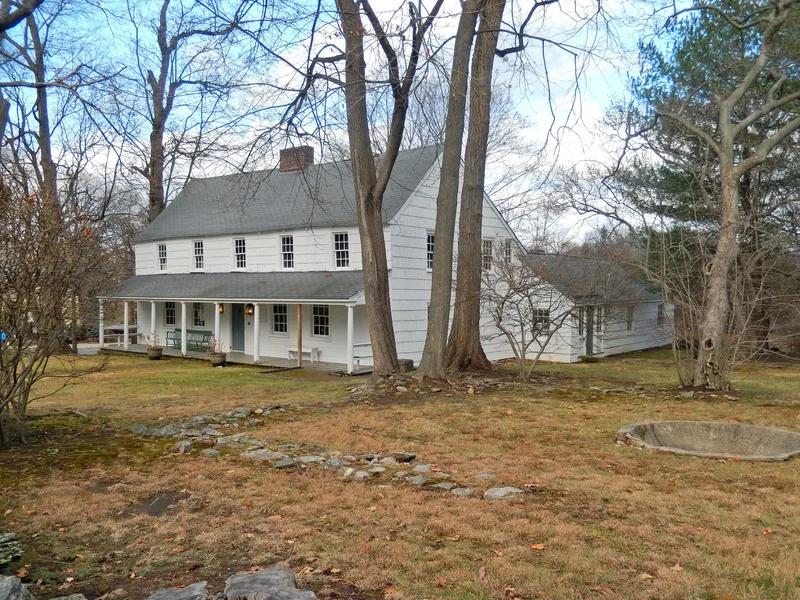
Standing at the corner of Milton Road and Rye Beach Avenue, the Timothy Knapp House is a two-and-a-half-story frame dwelling that was already present by 1670. It is the oldest surviving residence in Rye and in Westchester County. The house grew in stages, with additions before 1700 and before 1750, plus twentieth-century wings, yet it keeps early beams, posts, wide floorboards and wrought-iron hardware. It sits on land once held by Thomas Studwell, one of Rye's three original proprietors, and was acquired by Timothy Knapp, who served as a deputy to the General Court at Hartford. Across the road lies Milton Cemetery, laid out in 1750 on land given by Joseph Lyon and regarded as Rye's first public burying ground. Ezekiel Halsted, an eighteenth-century owner of the house, is buried there. Together the two properties preserve tangible evidence of Rye's early settlement.
Machine-generated summary. This summary was generated by a language model from the official nomination document and has not been reviewed line by line by an editor. It may contain errors. Check the source document before relying on any detail. Source: nomination document (PDF) · catalog entry. Generated October 2026 (model claude-sonnet-5-5, prompt v1.0-2026-10-29).
| Period of significance | 1600-1799 (specific dates 1670, 1750) |
|---|---|
| Areas of significance | Exploration/Settlement, Architecture |
| Acreage | 1.5 |
| Boundary source | not published |
| Full listing page | Knapp, Timothy, House and Milton Cemetery (property record) |
What listing means for this property
This is a historic district. Buildings within its boundary are either contributing (they add to the district's significance) or non-contributing. Owners of contributing income-producing buildings can claim the 20% federal rehabilitation tax credit; homeowners should look at state credits. National Register districts impose no design review by themselves; a local historic district ordinance, if one exists, does (the difference explained).
General information, not legal or tax advice. Rules change; confirm with your State Historic Preservation Office or a qualified adviser.