Kensington Gardens Apartment Complex

Why it's listed
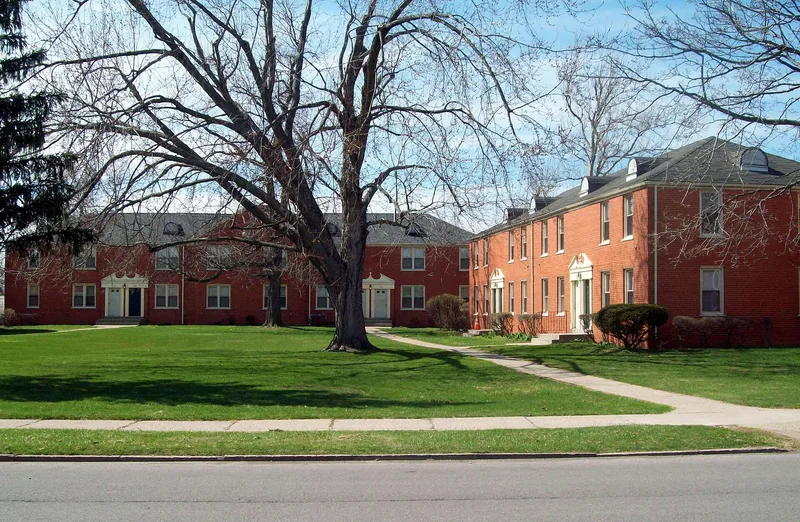
Kensington Gardens is a World War II-era apartment complex on the eastern edge of Buffalo, New York, next to Cheektowaga. Built in 1941-42 by New York City developer Godfrey Weinstein, it holds 280 one-, two- and three-bedroom apartments in 59 detached or semi-attached brick buildings. The Colonial Revival buildings are grouped around grassed courts along curving interior streets, with three building types and entrances topped by fans, pediments or dentil moldings. The complex was built to house workers in nearby war industries, including Curtiss-Wright and Bell Aircraft, at a time when employment in the Buffalo area grew sharply. Weinstein, acting on Federal Housing Administration guidance about where housing was most needed, developed it with FHA mortgage insurance. Its layout follows garden city ideas promoted by the agency: low building coverage, shared green space and curvilinear streets away from main roads. When completed it was the largest privately built housing project in Buffalo. Its original site plan, building forms and apartment layouts remain largely intact, and the buildings continue to serve as apartments.
Machine-generated summary. This summary was generated by a language model from the official nomination document and has not been reviewed line by line by an editor. It may contain errors. Check the source document before relying on any detail. Source: nomination document (PDF) · catalog entry. Generated October 2026 (model claude-sonnet-5-5, prompt v1.0-2026-10-29).
| Period of significance | 1941 - 1942 |
|---|---|
| Styles | Late 19th & 20th Century Revivals / Colonial Revival |
| Areas of significance | Community Planning and Development, Politics/Government |
| Acreage | 20.8 |
| Boundary source | NPS cultural-resource GIS polygon |
| Full listing page | Kensington Gardens Apartment Complex (property record) |
What listing means for this property
This is a historic district. Buildings within its boundary are either contributing (they add to the district's significance) or non-contributing. Owners of contributing income-producing buildings can claim the 20% federal rehabilitation tax credit; homeowners should look at state credits. National Register districts impose no design review by themselves; a local historic district ordinance, if one exists, does (the difference explained).
General information, not legal or tax advice. Rules change; confirm with your State Historic Preservation Office or a qualified adviser.