Jones Road Historic District

Why it's listed
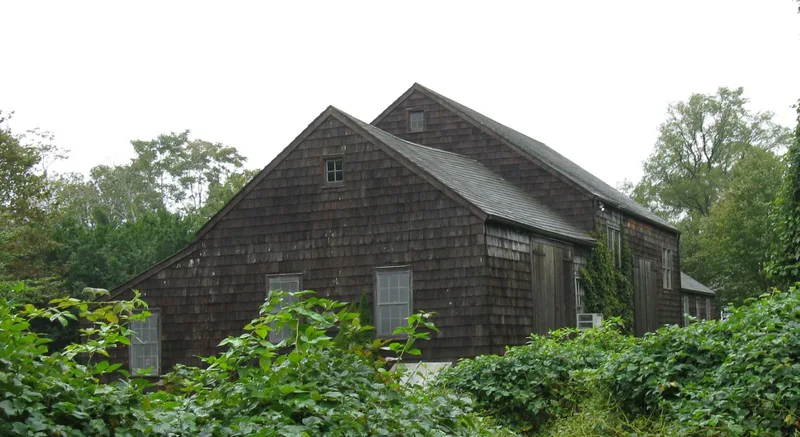
Jones Road and its neighboring stretches of Apaquogue Road and Lily Pond Lane form a small residential enclave in the southwest corner of East Hampton village. Narrow roads, uneven ground, informal landscaping and shingled frame buildings on large lots give the area a rural feel that surrounding development has lost. The oldest property is the mid-eighteenth-century Miller farmhouse, a Cape Cod type with its barn. The 1884 Apaquogue boarding house recalls the era of summer boarders, and the 1895 T. Smith House began the age of private summer residences. Most of the remaining buildings date from the early twentieth century. Mary Talmage designed and built five cottages between 1910 and 1915, drawing on local eighteenth-century forms. Her mother's remodeled former poorhouse, Century Cottage, and the 1921 Spindrift, designed by Lewis Colt Albro from two older cottages, complete the group. The district has nineteen contributing buildings and three non-contributing ones.
Machine-generated summary. This summary was generated by a language model from the official nomination document and has not been reviewed line by line by an editor. It may contain errors. Check the source document before relying on any detail. Source: nomination document (PDF) · catalog entry. Generated October 2026 (model claude-sonnet-5-5, prompt v1.0-2026-10-29).
| Period of significance | c.1750-1921 |
|---|---|
| Styles | Colonial Revival, Shingle style, and eighteenth and nineteenth century vernacular (Cape Cod type) |
| Areas of significance | Exploration/Settlement, Architecture |
| Acreage | 25 |
| Boundary source | NPS cultural-resource GIS polygon |
| Full listing page | Jones Road Historic District (property record) |
What listing means for this property
This is a historic district. Buildings within its boundary are either contributing (they add to the district's significance) or non-contributing. Owners of contributing income-producing buildings can claim the 20% federal rehabilitation tax credit; homeowners should look at state credits. National Register districts impose no design review by themselves; a local historic district ordinance, if one exists, does (the difference explained).
General information, not legal or tax advice. Rules change; confirm with your State Historic Preservation Office or a qualified adviser.