Jacob Riis Park Historic District

Why it's listed
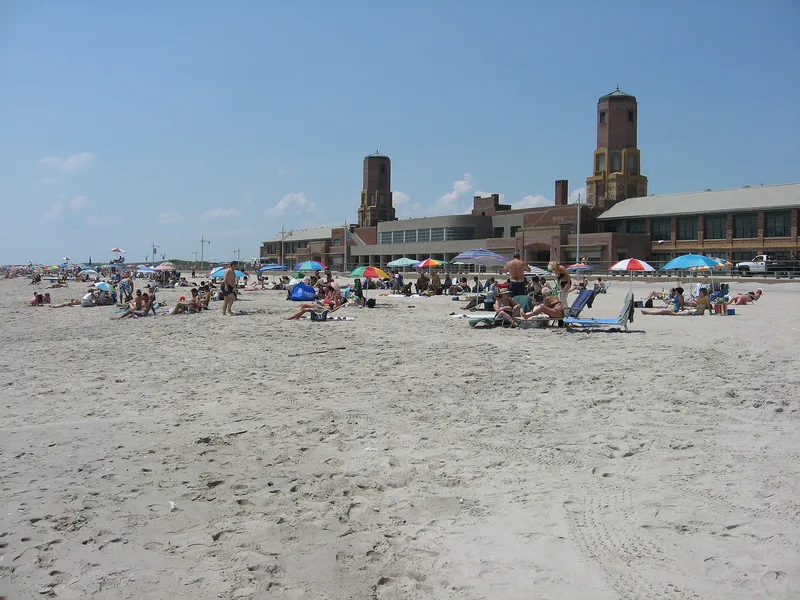
Jacob Riis Park occupies a mile-long stretch of the Rockaway Peninsula in Queens, and its core is a historic district of three seaside recreation buildings put up between 1932 and 1937. The largest is the brick Bathing Pavilion, a T-shaped complex with an open court holding 10,000 wooden cabanas, an arcade with octagonal turrets, and two four-story towers on the ocean side. Stoughton and Plonck designed the first section; the New York City Department of Parks enlarged it in 1936-37 with Clinton Lloyd and consultant Aymar Embury II. Two twin Central Mall Buildings face each other across the mall and hold a cafeteria and offices. The district matters as an example of Art Deco recreational architecture and planned public park design. Work Progress Administration funding paid for its construction, and it is linked to Parks Commissioner Robert Moses. The park opened July 3, 1937, was run by New York City until 1972, and then passed to the National Park Service.
Machine-generated summary. This summary was generated by a language model from the official nomination document and has not been reviewed line by line by an editor. It may contain errors. Check the source document before relying on any detail. Source: nomination document (PDF) · catalog entry. Generated October 2026 (model claude-sonnet-5-5, prompt v1.0-2026-10-29).
| Period of significance | 1932-1937 |
|---|---|
| Styles | Art Deco (Bathhouse); also described as Moderne recreational architecture |
| Areas of significance | Landscape Architecture, Entertainment/Recreation, Architecture |
| Acreage | 88 |
| Boundary source | NPS cultural-resource GIS polygon |
| Full listing page | Jacob Riis Park Historic District (property record) |
What listing means for this property
This is a historic district. Buildings within its boundary are either contributing (they add to the district's significance) or non-contributing. Owners of contributing income-producing buildings can claim the 20% federal rehabilitation tax credit; homeowners should look at state credits. National Register districts impose no design review by themselves; a local historic district ordinance, if one exists, does (the difference explained).
General information, not legal or tax advice. Rules change; confirm with your State Historic Preservation Office or a qualified adviser.