Hurley Historic District

Why it's listed
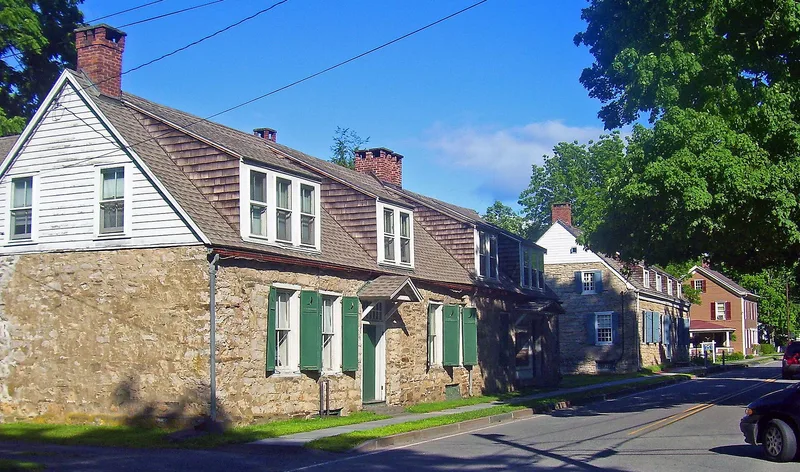
Hurley is a village in Ulster County, New York, between the Hudson River and the Catskills, where a group of 18th-century stone houses still reflects its Dutch origins. Settled as Nieuw Dorp, or New Village, it has kept much of its early character. Ten stone dwellings line Main Street, which is U.S. Route 209, and more survive nearby, with a few showing English rather than Dutch traits. Many were built between 1720 and 1783, including the Houghtaling, Van Deusen, DuMond and Elmendorf houses. The Reformed Church of 1853 and the Old Hurley Cemetery, with a stone dated 1741, anchor the district. Traditions tie the Van Deusen House to the New York Council of Safety in 1777 and the Houghtaling House to General George Clinton and a reception for George Washington in 1782. The Hardenbergh House, dating from about 1750 and heavily restored in the mid-20th century, is the birthplace of Sojourner Truth. The district was recognized for preserving Dutch heritage.
Machine-generated summary. This summary was generated by a language model from the official nomination document and has not been reviewed line by line by an editor. It may contain errors. Check the source document before relying on any detail. Source: nomination document (PDF) · catalog entry. Generated October 2026 (model claude-sonnet-5-5, prompt v1.0-2026-10-29).
| Styles | Dutch stone houses (Dutch Colonial vernacular), with Georgian and Greek Revival elements |
|---|---|
| Areas of significance | Military, Exploration/Settlement, Architecture |
| Acreage | 25 |
| Boundary source | NPS cultural-resource GIS polygon |
| Full listing page | Hurley Historic District (property record) |
What listing means for this property
This is a historic district. Buildings within its boundary are either contributing (they add to the district's significance) or non-contributing. Owners of contributing income-producing buildings can claim the 20% federal rehabilitation tax credit; homeowners should look at state credits. National Register districts impose no design review by themselves; a local historic district ordinance, if one exists, does (the difference explained).
General information, not legal or tax advice. Rules change; confirm with your State Historic Preservation Office or a qualified adviser.