Hunterfly Road Historic District

The National Park Service has not published a boundary polygon for this district; the map shows the listed properties inside it and the district's reference point.
Why it's listed
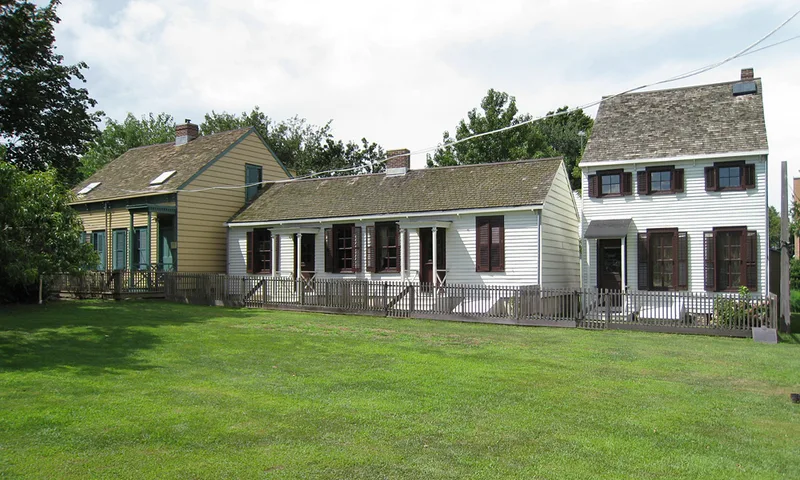
Four small wood-frame houses on Bergen Street in Brooklyn's Bedford-Stuyvesant neighborhood sit along a surviving fragment of Hunterfly Road, a seventeenth-century route that once linked farms with Jamaica Bay. Most of the surrounding land was leveled and fitted to the street grid in the 1880s, yet these lots and the old right-of-way were kept. The house at 1702-04 Bergen Street, a one-story double house dating to about 1830, is believed to be the oldest. The houses at 1698 and 1700 were built around 1883-1886. The fourth house, at 1706-08, burned and was replaced in 1993 by a replica, so it is counted as non-contributing. All four were later owned by one owner and rented to tenants. The group is tied to the nineteenth-century African American community of Weeksville and preserves evidence of early Brooklyn settlement that is otherwise absent from the modern streetscape. Restorations in the 1980s altered windows, roofs, and interiors. The district includes three contributing buildings and the road right-of-way as a contributing structure.
Machine-generated summary. This summary was generated by a language model from the official nomination document and has not been reviewed line by line by an editor. It may contain errors. Check the source document before relying on any detail. Source: nomination document (PDF) · catalog entry. Generated October 2026 (model claude-sonnet-5-5, prompt v1.0-2026-10-29).
| Styles | No style |
|---|---|
| Areas of significance | Social History, Architecture, Black |
| Acreage | 2 |
| Boundary source | not published |
| Full listing page | Hunterfly Road Historic District (property record) |
What listing means for this property
This is a historic district. Buildings within its boundary are either contributing (they add to the district's significance) or non-contributing. Owners of contributing income-producing buildings can claim the 20% federal rehabilitation tax credit; homeowners should look at state credits. National Register districts impose no design review by themselves; a local historic district ordinance, if one exists, does (the difference explained).
General information, not legal or tax advice. Rules change; confirm with your State Historic Preservation Office or a qualified adviser.