Hubbell Family Farm and Kelly's Corners Cemetery

Why it's listed
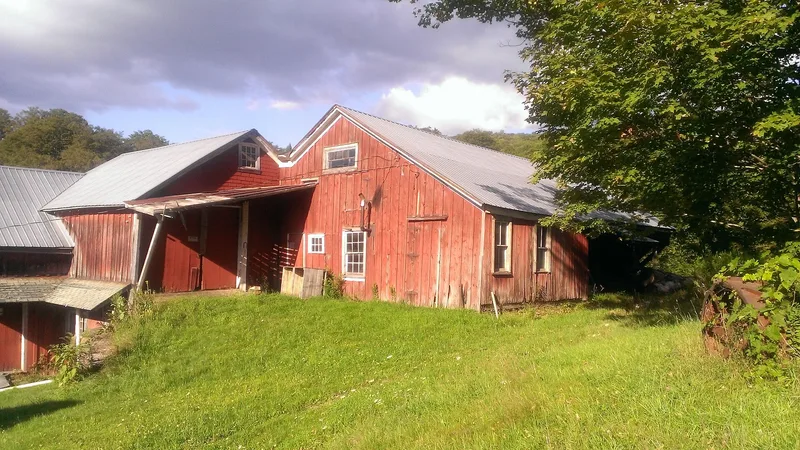
Along NY 30 in Kelly's Corners, north of Margaretville, a 276-acre farm climbs from the East Branch of the Delaware River to a ridge about 1,800 feet high. Milo Hubbell bought the land in 1850, and his descendants developed it into a mixed farm with a sawmill, cider mill, dairy barn, blacksmith shop, carriage house, residences, and a hardware and machine business. Stone walls, cattle passes, fields, orchards and forested areas mark how the land was used over time. Ulster and Delaware Railroad tracks run through the property. A 1960s road relocation moved the highway west and destroyed one earlier cluster of Hubbell buildings. South of the farm, a terraced cemetery of one and one-half acres was established in 1886 by Elder J.D. Hubbell. It holds every Hubbell family member tied to the farm and serves neighbors as well. The district includes 25 contributing resources, and family records, diaries and photographs survive to support its interpretation.
Machine-generated summary. This summary was generated by a language model from the official nomination document and has not been reviewed line by line by an editor. It may contain errors. Check the source document before relying on any detail. Source: nomination document (PDF) · catalog entry. Generated October 2026 (model claude-sonnet-5-5, prompt v1.0-2026-10-29).
| Styles | No style |
|---|---|
| Areas of significance | Agriculture, Industry, Commerce, Architecture, Social History |
| Acreage | 276 |
| Boundary source | NPS cultural-resource GIS polygon |
| Full listing page | Hubbell Family Farm and Kelly's Corners Cemetery (property record) |
What listing means for this property
This is a historic district. Buildings within its boundary are either contributing (they add to the district's significance) or non-contributing. Owners of contributing income-producing buildings can claim the 20% federal rehabilitation tax credit; homeowners should look at state credits. National Register districts impose no design review by themselves; a local historic district ordinance, if one exists, does (the difference explained).
General information, not legal or tax advice. Rules change; confirm with your State Historic Preservation Office or a qualified adviser.