Houghtaling, Peter, Farm and Lime Kiln

Why it's listed
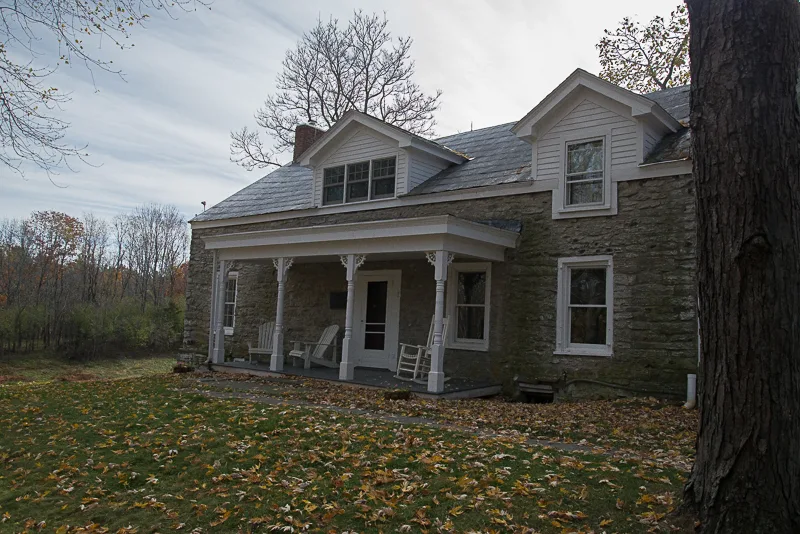
Set in a sparsely settled upland area near Coxsackie, this 154-acre farm was started in 1790 when Thomas Houghtaling set aside land for his son Peter. The centerpiece is a one-and-one-half story stone farmhouse built in 1794, with datestones bearing both men's initials. Its rectangular, center-hall plan and rubble walls follow the Dutch vernacular tradition of the upper Hudson Valley. Around it are a well, smokehouse, privy, three nineteenth-century barns, early twentieth-century outbuildings, a walled family burial plot and orchards of apple and pear trees. A mid-nineteenth-century limestone lime kiln stands beside the Kalkberg, reflecting the area's growing lime industry. The farm is considered significant because these buildings, structures and landscape features keep their historic relationships and show how upland families adapted from grain to fruit, hay and lime as cash sources between 1790 and 1910. A modern greenhouse and a rebuilt woodshed are the only non-contributing features.
Machine-generated summary. This summary was generated by a language model from the official nomination document and has not been reviewed line by line by an editor. It may contain errors. Check the source document before relying on any detail. Source: nomination document (PDF) · catalog entry. Generated October 2026 (model claude-sonnet-5-5, prompt v1.0-2026-10-29).
| Period of significance | c. 1790-c. 1910 |
|---|---|
| Styles | Dutch vernacular tradition of the upper Hudson Valley (farmhouse) |
| Areas of significance | Agriculture, Exploration/Settlement, Architecture |
| Acreage | 154 |
| Boundary source | NPS cultural-resource GIS polygon |
| Full listing page | Houghtaling, Peter, Farm and Lime Kiln (property record) |
What listing means for this property
This is a historic district. Buildings within its boundary are either contributing (they add to the district's significance) or non-contributing. Owners of contributing income-producing buildings can claim the 20% federal rehabilitation tax credit; homeowners should look at state credits. National Register districts impose no design review by themselves; a local historic district ordinance, if one exists, does (the difference explained).
General information, not legal or tax advice. Rules change; confirm with your State Historic Preservation Office or a qualified adviser.