Holy Trinity Monastery

Why it's listed
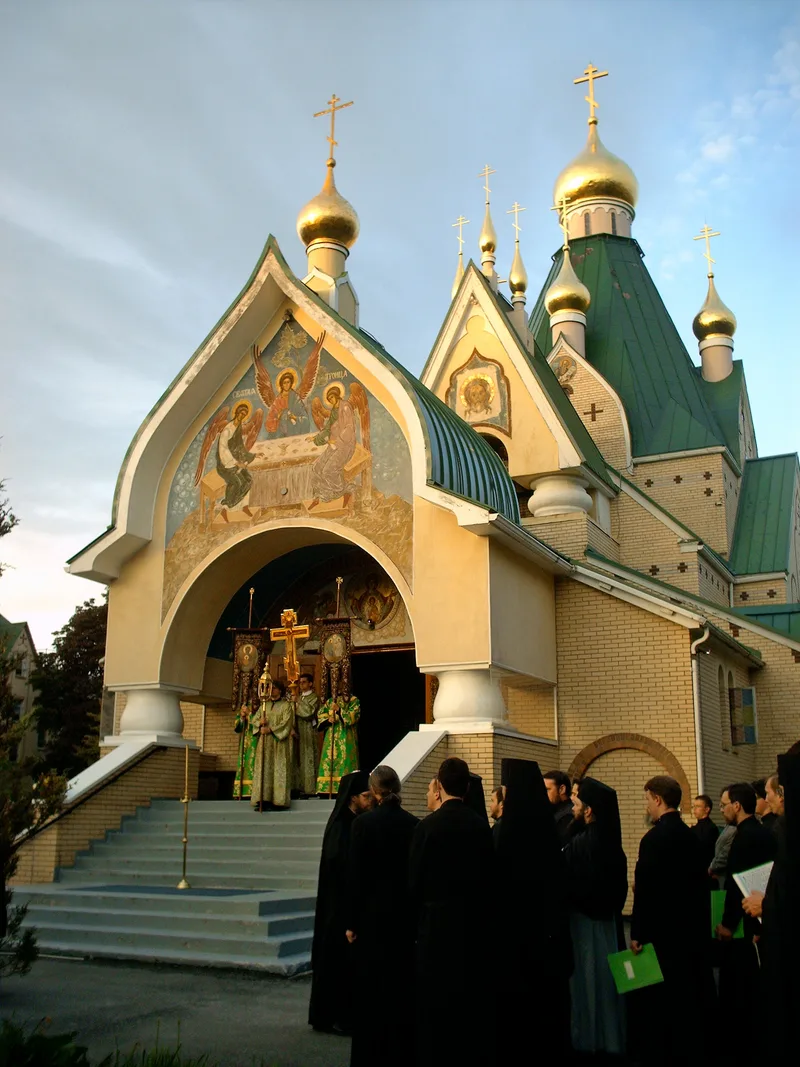
Holy Trinity Monastery occupies about 750 acres of farmland and rolling hills on the northern edge of Jordanville, in Herkimer County. The Russian Orthodox community took shape in the 1930s and 1940s, when monks who had fled the Soviet Union settled here. The central campus is a quadrangle formed by the cathedral, a bell tower, the monastery building and the seminary. Holy Trinity Cathedral, built from 1946 to 1950 to designs by R. N. Verkovsky, follows the tent style of northern Russia and has pale yellow brick walls and nine gold onion domes. Monks carried out much of the construction, metalwork, carving and the icon painting that covers the interior. Other features include a convent, student and faculty housing, a guest house, two cemeteries, a lakeside fieldstone chapel and large wooden crosses. Together, 56 resources reflect a working religious community with a continuing role in the Russian Orthodox Church Outside Russia.
Machine-generated summary. This summary was generated by a language model from the official nomination document and has not been reviewed line by line by an editor. It may contain errors. Check the source document before relying on any detail. Source: nomination document (PDF) · catalog entry. Generated October 2026 (model claude-sonnet-5-5, prompt v1.0-2026-10-29).
| Styles | Other: Russian Traditional Tent Style |
|---|---|
| Areas of significance | Performing Arts, Architecture, European, Religion |
| Acreage | 750 |
| Boundary source | NPS cultural-resource GIS polygon |
| Full listing page | Holy Trinity Monastery (property record) |
What listing means for this property
This is a historic district. Buildings within its boundary are either contributing (they add to the district's significance) or non-contributing. Owners of contributing income-producing buildings can claim the 20% federal rehabilitation tax credit; homeowners should look at state credits. National Register districts impose no design review by themselves; a local historic district ordinance, if one exists, does (the difference explained).
General information, not legal or tax advice. Rules change; confirm with your State Historic Preservation Office or a qualified adviser.