Hillsdale Hamlet Historic District

Why it's listed
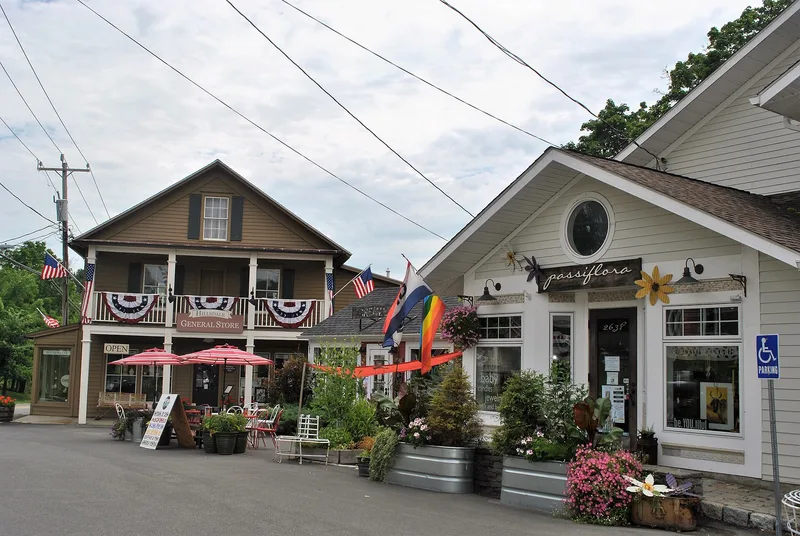
Hillsdale hamlet, in the southeastern corner of Columbia County, New York, grew along an early road linking western Massachusetts with the Hudson River, which became the Columbia Turnpike in 1799. Most of its properties line Route 23, with a second street to the south holding some of the oldest houses. The district contains 135 contributing resources, mainly houses, outbuildings, churches and a cemetery. Its most notable feature is a group of Federal Period buildings, including brick inns built by landholders Parla Foster and Refine Latting, whose Flemish bond facades reflect New England building traditions. Frame townhouses and farmhouses show the move from Federal to Greek Revival design during the turnpike boom of the 1830s and 1840s, with recurring entrance details linked to local carpenters of the Becker family. The railroad arrived in 1852 and brought summer tourists, who encouraged later alterations such as porches. Latting's inn has operated as a hotel or tavern continuously to the present.
Machine-generated summary. This summary was generated by a language model from the official nomination document and has not been reviewed line by line by an editor. It may contain errors. Check the source document before relying on any detail. Source: nomination document (PDF) · catalog entry. Generated October 2026 (model claude-sonnet-5-5, prompt v1.0-2026-10-29).
| Styles | Early Republic (Federal); Mid-19th Century (Greek Revival, Gothic Revival); Late Victorian (Italianate, Second Empire) |
|---|---|
| Areas of significance | Architecture, Commerce, Transportation |
| Acreage | 75 |
| Boundary source | NPS cultural-resource GIS polygon |
| Full listing page | Hillsdale Hamlet Historic District (property record) |
What listing means for this property
This is a historic district. Buildings within its boundary are either contributing (they add to the district's significance) or non-contributing. Owners of contributing income-producing buildings can claim the 20% federal rehabilitation tax credit; homeowners should look at state credits. National Register districts impose no design review by themselves; a local historic district ordinance, if one exists, does (the difference explained).
General information, not legal or tax advice. Rules change; confirm with your State Historic Preservation Office or a qualified adviser.