High Falls Historic District

Why it's listed
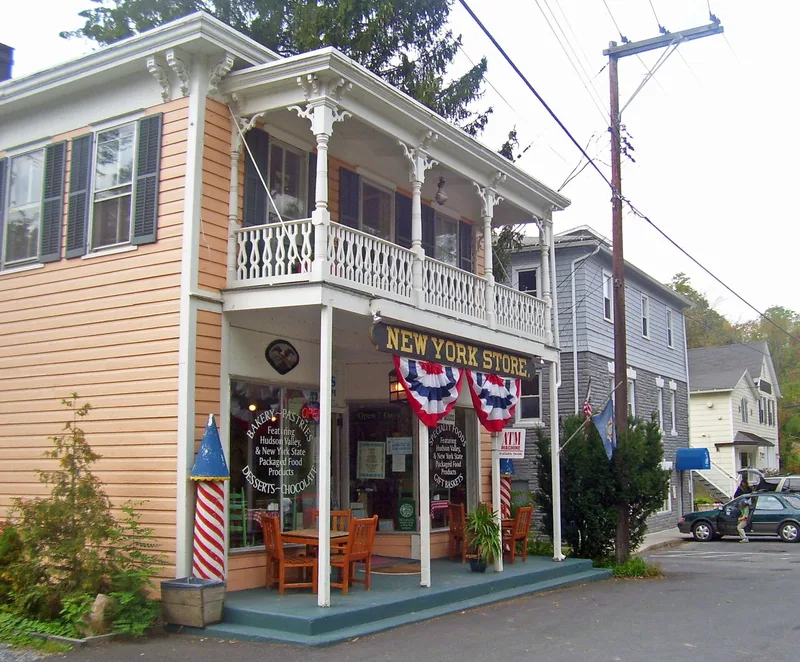
High Falls is a small village in Marbletown, Ulster County, at the base of the Shawangunk Mountains, where Rondout Creek drops over a rock formation. The historic district covers about 21 acres and includes stores, inns, churches, a canal-era lock and a range of houses for merchants, manufacturers and workers. Notable buildings include the 1797 stone DePuy Canal House, the 1867 Reformed Church, the 1882-85 St. John's Episcopal Memorial Chapel, now a canal museum, and ruins of Delaware and Hudson Canal Locks 17 and 18. The village grew after the canal opened in 1825-1828 and after natural cement was discovered nearby in 1825. Between 1825 and 1880 it became a manufacturing and transportation center. The canal closed in 1899, and the later Ashokan Reservoir work brought some revival. The district was listed for its architecture, its canal and industrial history, and its well-preserved mid-nineteenth century village plan.
Machine-generated summary. This summary was generated by a language model from the official nomination document and has not been reviewed line by line by an editor. It may contain errors. Check the source document before relying on any detail. Source: nomination document (PDF) · catalog entry. Generated October 2026 (model claude-sonnet-5-5, prompt v1.0-2026-10-29).
| Period of significance | ca. 1790 - ca. 1940 |
|---|---|
| Styles | Dutch Colonial, Federal, Greek Revival, Vernacular |
| Areas of significance | Architecture, Engineering, Community Planning and Development, Industry |
| Acreage | 21 |
| Boundary source | NPS cultural-resource GIS polygon |
| Full listing page | High Falls Historic District (property record) |
What listing means for this property
This is a historic district. Buildings within its boundary are either contributing (they add to the district's significance) or non-contributing. Owners of contributing income-producing buildings can claim the 20% federal rehabilitation tax credit; homeowners should look at state credits. National Register districts impose no design review by themselves; a local historic district ordinance, if one exists, does (the difference explained).
General information, not legal or tax advice. Rules change; confirm with your State Historic Preservation Office or a qualified adviser.