Hedges, The

Why it's listed
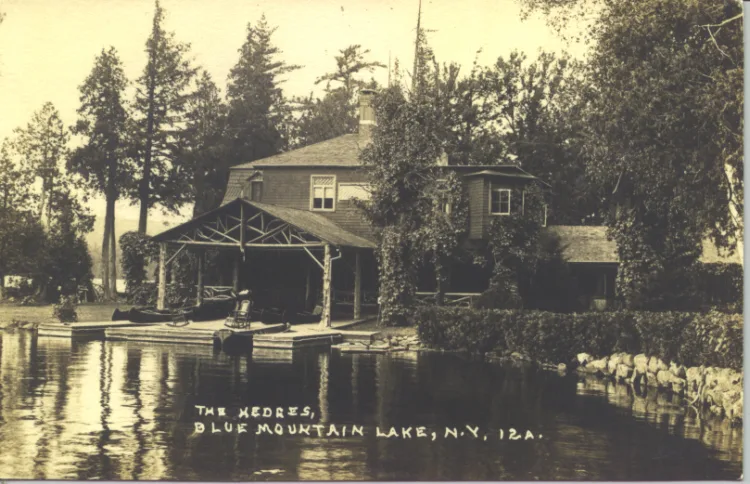
The Hedges is a rustic lodge complex on about 1,500 feet of Blue Mountain Lake shoreline in the Town of Indian Lake, Hamilton County, New York. The nominated 12.5 acres are what remains of an original 266-acre property. The Main Lodge, built in 1882, has a mansard roof, half-log siding and a wraparound porch, with patterned wood ceilings inside. The Stone Lodge, built between 1900 and 1903, has a large gambrel roof, pink granite walls on the first floor and a shingled upper story. Hiram B. Duryea used the property as a seasonal home from about 1890 to 1920. In 1920 Richard J. Collins bought it and converted it to an Adirondack resort, which his family owned until 1972 and which added many buildings. Today it is an inn. Of the thirty buildings and structures, twenty-three contribute to the district. Its significance rests on architecture, recreation and tourism, and industry, and on the association with Duryea, for the years 1882 to 1959.
Machine-generated summary. This summary was generated by a language model from the official nomination document and has not been reviewed line by line by an editor. It may contain errors. Check the source document before relying on any detail. Source: nomination document (PDF) · catalog entry. Generated October 2026 (model claude-sonnet-5-5, prompt v1.0-2026-10-29).
| Period of significance | 1882 - 1959 |
|---|---|
| Styles | Late 19th and Early 20th Century American Movements/Rustic |
| Areas of significance | Architecture, Entertainment/Recreation, Industry |
| Acreage | 12.5 |
| Boundary source | NPS cultural-resource GIS polygon |
| Full listing page | Hedges, The (property record) |
What listing means for this property
This is a historic district. Buildings within its boundary are either contributing (they add to the district's significance) or non-contributing. Owners of contributing income-producing buildings can claim the 20% federal rehabilitation tax credit; homeowners should look at state credits. National Register districts impose no design review by themselves; a local historic district ordinance, if one exists, does (the difference explained).
General information, not legal or tax advice. Rules change; confirm with your State Historic Preservation Office or a qualified adviser.