Heckscher Park

Why it's listed
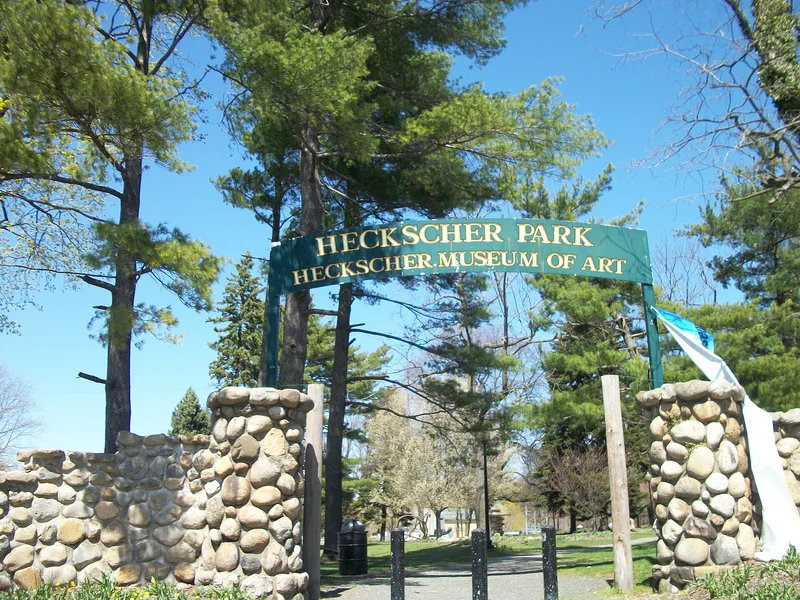
Heckscher Park covers about eighteen and one-half acres east of downtown Huntington, Suffolk County. Industrialist and philanthropist August Heckscher created it in 1920 after buying the site of Ezra Prime's former thimble factory, which had used water power from a dam on the property. The factory and Prime's Italianate house were demolished, leaving the Old Mill Pond as the main visible reminder. The park offers wooded areas, open lawn, walkways, rustic fencing, specimen plantings and a stream crossed by small cobblestone bridges. Three buildings contribute to its character: a Renaissance Revival museum of smooth ashlar with Doric pilasters and a modillioned cornice, a bungalow-style cobblestone cottage built as caretaker's quarters, and an octagonal cobblestone gazebo. A c. 1970 bandshell and a 1984 garage do not contribute. The park was recognized as a representative early twentieth-century landscaped park that reflects Huntington's growth around 1900 and has changed little since it opened. The factory site may also hold archeological potential.
Machine-generated summary. This summary was generated by a language model from the official nomination document and has not been reviewed line by line by an editor. It may contain errors. Check the source document before relying on any detail. Source: nomination document (PDF) · catalog entry. Generated October 2026 (model claude-sonnet-5-5, prompt v1.0-2026-10-29).
| Styles | Second Renaissance Revival (museum); Bungalow (cobblestone cottage); early twentieth-century park architecture (gazebo) |
|---|---|
| Areas of significance | Architecture |
| Acreage | 18.5 |
| Boundary source | NPS cultural-resource GIS polygon |
| Full listing page | Heckscher Park (property record) |
What listing means for this property
This is a historic district. Buildings within its boundary are either contributing (they add to the district's significance) or non-contributing. Owners of contributing income-producing buildings can claim the 20% federal rehabilitation tax credit; homeowners should look at state credits. National Register districts impose no design review by themselves; a local historic district ordinance, if one exists, does (the difference explained).
General information, not legal or tax advice. Rules change; confirm with your State Historic Preservation Office or a qualified adviser.