Hawley-Green Street Historic District (Boundary Increase)

The National Park Service has not published a boundary polygon for this district; the map shows the listed properties inside it and the district's reference point.
Why it's listed
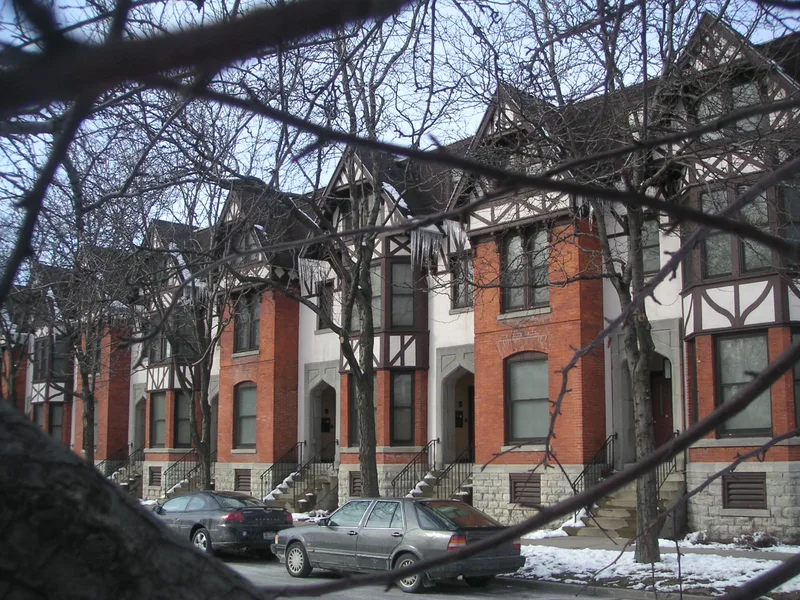
Hawley-Green Street is a compact residential neighborhood on the near northeast side of Syracuse, with about fifty buildings along Hawley and Green Streets and the adjoining parts of McBride, Howard and Lodi Streets. Nearly every popular style from the nineteenth and early twentieth centuries appears here, from a few modest Greek Revival cottages of the 1840s and 1850s to the Italianate Beadle houses on Hawley Avenue. The north side of the 200 block of Green Street holds the grandest homes, including a Queen Anne house with a cylindrical tower built in 1890 for a congressman and a Romanesque residence with Eastlake porches. Greenway Place, built in 1882 as fourteen Second Empire units on the site of a brewery, was later given Tudor facades. Settlement by Irish and German immigrants began in the 1850s, and trolley lines encouraged later growth. Many large houses have since become apartments, but the district remains one of the few relatively intact residential areas in the surrounding part of the city.
Machine-generated summary. This summary was generated by a language model from the official nomination document and has not been reviewed line by line by an editor. It may contain errors. Check the source document before relying on any detail. Source: nomination document (PDF) · catalog entry. Generated October 2026 (model claude-sonnet-5-5, prompt v1.0-2026-10-29).
| Period of significance | 1800-1899, 1900- |
|---|---|
| Styles | Greek Revival, Italianate, Second Empire, Queen Anne, Romanesque, Eastlake, and Tudor |
| Areas of significance | Architecture, Community Planning and Development |
| Acreage | 21.21 |
| Boundary source | not published |
| Full listing page | Hawley-Green Street Historic District (Boundary Increase) (property record) |
What listing means for this property
This is a historic district. Buildings within its boundary are either contributing (they add to the district's significance) or non-contributing. Owners of contributing income-producing buildings can claim the 20% federal rehabilitation tax credit; homeowners should look at state credits. National Register districts impose no design review by themselves; a local historic district ordinance, if one exists, does (the difference explained).
General information, not legal or tax advice. Rules change; confirm with your State Historic Preservation Office or a qualified adviser.