Hanover Square Historic District

The National Park Service has not published a boundary polygon for this district; the map shows the listed properties inside it and the district's reference point.
Why it's listed
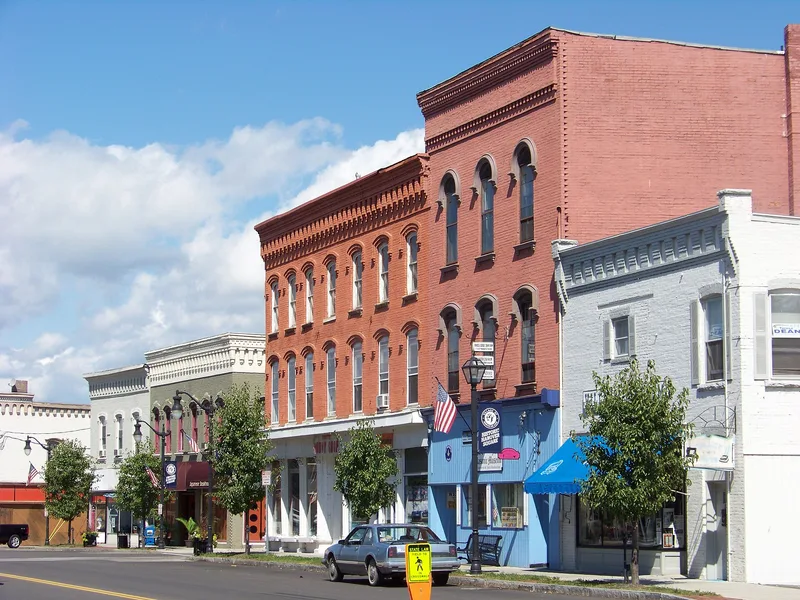
Hanover Square is the commercial heart of Horseheads, a village in New York's Southern Tier near Elmira and Corning. The historic district contains 21 buildings, eighteen of them Romanesque Revival brick rows raised in the two decades after an August 1862 fire leveled the square. Most are two or three stories, with shops at street level and offices, apartments or storage above, topped by corbelled brick cornices. Three buildings differ in style: the Second Empire Ryant House, a former hotel, a Colonial Revival former Southern Oil Company office of 1929, and the Classical Revival Marine Midland Bank of 1927. The square grew with the Chemung feeder canal, which opened between 1829 and 1832 and closed in 1877, and it later served as a political and social gathering place. Cartoonist Eugene Zimmerman kept an office here. Although many storefronts have been altered, the upper stories preserve the look of a nineteenth-century small-town business center.
Machine-generated summary. This summary was generated by a language model from the official nomination document and has not been reviewed line by line by an editor. It may contain errors. Check the source document before relying on any detail. Source: nomination document (PDF) · catalog entry. Generated October 2026 (model claude-sonnet-5-5, prompt v1.0-2026-10-29).
| Period of significance | 1862-1929 |
|---|---|
| Styles | Romanesque Revival (also Second Empire, Colonial Revival, Classical Revival) |
| Areas of significance | Architecture |
| Acreage | 4 |
| Boundary source | not published |
| Full listing page | Hanover Square Historic District (property record) |
What listing means for this property
This is a historic district. Buildings within its boundary are either contributing (they add to the district's significance) or non-contributing. Owners of contributing income-producing buildings can claim the 20% federal rehabilitation tax credit; homeowners should look at state credits. National Register districts impose no design review by themselves; a local historic district ordinance, if one exists, does (the difference explained).
General information, not legal or tax advice. Rules change; confirm with your State Historic Preservation Office or a qualified adviser.