Hanford Mill

Why it's listed
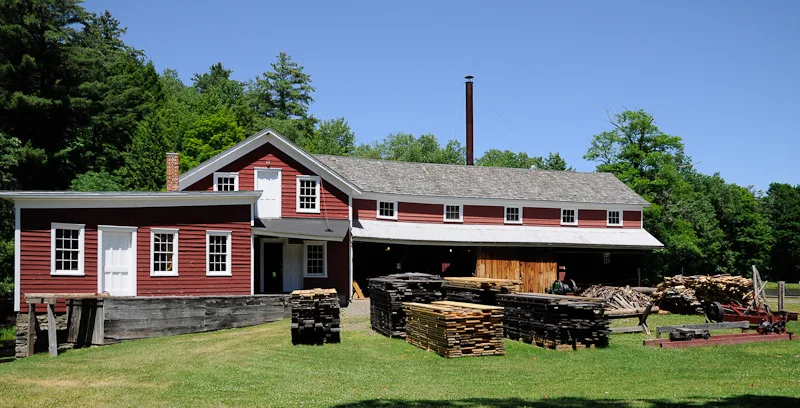
Hanford Mill is a 50-acre industrial complex at East Meredith, New York, built around a four-story wood-frame mill whose oldest section dates from the 1820s. Later additions came in the 1870s, 1880s and 1900s. The grounds include a raceway, a mill pond, a depot with grain elevator, a hardware store, barns, and a stretch of old railroad. Inside, an overshot steel waterwheel installed in 1925 powered belts that ran lathes, saws, sanders and grindstones, and two steam engines remain. The mill began as a small sawmill and grew after David Hanford bought it in 1860, adding a gristmill and woodworking equipment. Its workers made house parts, patterns for iron castings, and household goods, and the mill once generated electricity for the village. Business declined after World War I, and the mill was sold in 1945. It was listed as a well-preserved example of industrial technology, with machinery and records largely intact.
Machine-generated summary. This summary was generated by a language model from the official nomination document and has not been reviewed line by line by an editor. It may contain errors. Check the source document before relying on any detail. Source: nomination document (PDF) · catalog entry. Generated October 2026 (model claude-sonnet-5-5, prompt v1.0-2026-10-29).
| Period of significance | 19th Century (mill from the 1820s; 20th century activity also described) |
|---|---|
| Areas of significance | Industry, Architecture |
| Acreage | 50 |
| Boundary source | NPS cultural-resource GIS polygon |
| Full listing page | Hanford Mill (property record) |
What listing means for this property
This is a historic district. Buildings within its boundary are either contributing (they add to the district's significance) or non-contributing. Owners of contributing income-producing buildings can claim the 20% federal rehabilitation tax credit; homeowners should look at state credits. National Register districts impose no design review by themselves; a local historic district ordinance, if one exists, does (the difference explained).
General information, not legal or tax advice. Rules change; confirm with your State Historic Preservation Office or a qualified adviser.