Hand-Hale Historic District

Why it's listed
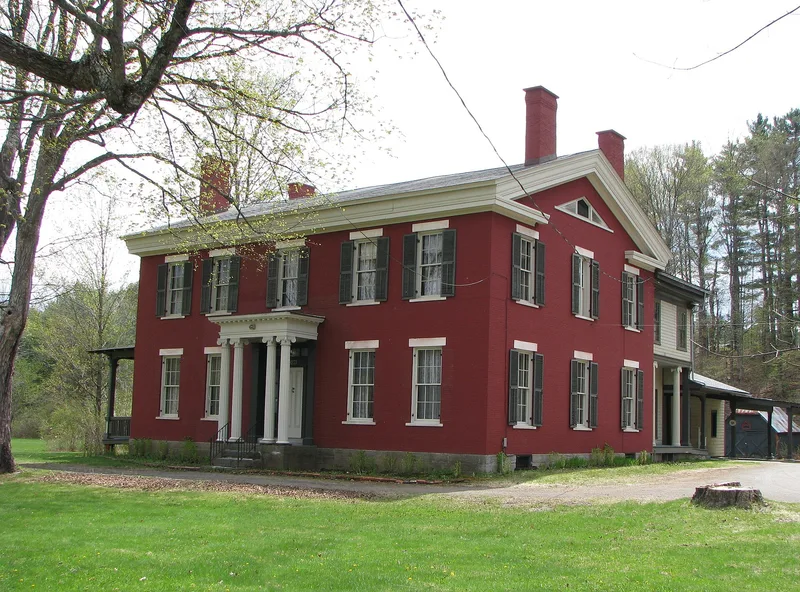
Two neighboring country estates on River Street in Elizabethtown, in the Adirondack foothills, make up this 23-acre district. The Hand property centers on a formal brick Greek Revival house built in 1849 and a law office dating from before 1830. Next door, the Hale property includes a rambling frame house of 1814, greatly modified between 1850 and 1870, along with a law office, a barn complex of about 1850 and a caretaker's cottage. The Branch River runs through the grounds, and broad lawns and tall trees frame the buildings. The estates belonged to attorneys Augustus C. Hand and Robert S. Hale, whose influence reached well beyond Essex County. Hand served in Congress and on the state's highest court, and his descendants included Augustus Noble Hand and Learned Hand, noted federal judges. Hale also served in Congress. The buildings retain original interiors, including law libraries, and illustrate how law was practiced on the Adirondack frontier in the nineteenth century.
Machine-generated summary. This summary was generated by a language model from the official nomination document and has not been reviewed line by line by an editor. It may contain errors. Check the source document before relying on any detail. Source: nomination document (PDF) · catalog entry. Generated October 2026 (model claude-sonnet-5-5, prompt v1.0-2026-10-29).
| Styles | Greek Revival (Hand House and Law Office); romantic, eclectic mid-19th century (Hale House and Law Office) |
|---|---|
| Areas of significance | Law, Architecture |
| Acreage | 23 |
| Boundary source | NPS cultural-resource GIS polygon |
| Full listing page | Hand-Hale Historic District (property record) |
What listing means for this property
This is a historic district. Buildings within its boundary are either contributing (they add to the district's significance) or non-contributing. Owners of contributing income-producing buildings can claim the 20% federal rehabilitation tax credit; homeowners should look at state credits. National Register districts impose no design review by themselves; a local historic district ordinance, if one exists, does (the difference explained).
General information, not legal or tax advice. Rules change; confirm with your State Historic Preservation Office or a qualified adviser.