Hamilton Farmstead

Why it's listed
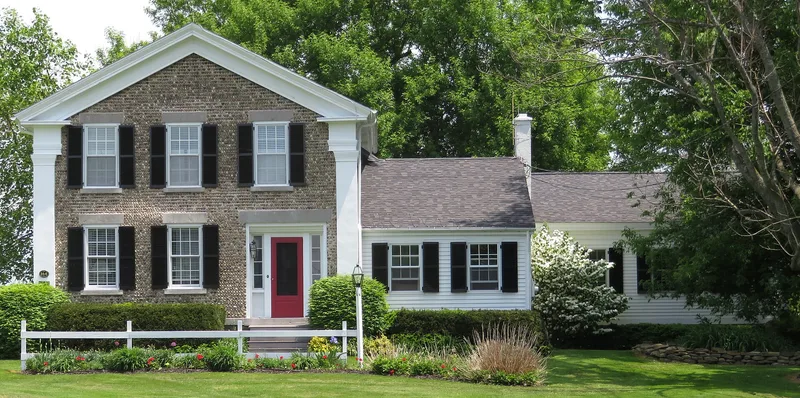
Sixteen acres of former farmland on Hamilton Street in Mexico, New York, hold a cobblestone farmhouse and several farm outbuildings. Richard and Agnes Hamilton came from Oneida County in 1824 and built the house beginning in 1848 with architect-mason David Wilcox, who married a Hamilton daughter. Cobbles were gathered at Mexico Point on Lake Ontario and laid in deep V-shaped mortar joints. The two-story, three-bay Greek Revival house has wide wooden corner pilasters, cut stone lintels and an entrance with sidelights. It is the only cobblestone building in the town and one of five in Oswego County. A mid-nineteenth-century wood barn, an early twentieth-century concrete block milkhouse and three hand-dug stone-lined wells survive, illustrating the shift to dairy farming. The farm later declined and lost many buildings, yet the remaining land and structures keep a rural character tied to the town's agricultural past.
Machine-generated summary. This summary was generated by a language model from the official nomination document and has not been reviewed line by line by an editor. It may contain errors. Check the source document before relying on any detail. Source: nomination document (PDF) · catalog entry. Generated October 2026 (model claude-sonnet-5-5, prompt v1.0-2026-10-29).
| Period of significance | 1848-c1930 |
|---|---|
| Styles | Greek Revival |
| Areas of significance | Agriculture, Architecture |
| Acreage | 15 |
| Boundary source | NPS cultural-resource GIS polygon |
| Full listing page | Hamilton Farmstead (property record) |
What listing means for this property
This is a historic district. Buildings within its boundary are either contributing (they add to the district's significance) or non-contributing. Owners of contributing income-producing buildings can claim the 20% federal rehabilitation tax credit; homeowners should look at state credits. National Register districts impose no design review by themselves; a local historic district ordinance, if one exists, does (the difference explained).
General information, not legal or tax advice. Rules change; confirm with your State Historic Preservation Office or a qualified adviser.