Halcyon Place Historic District

The National Park Service has not published a boundary polygon for this district; the map shows the listed properties inside it and the district's reference point.
Why it's listed
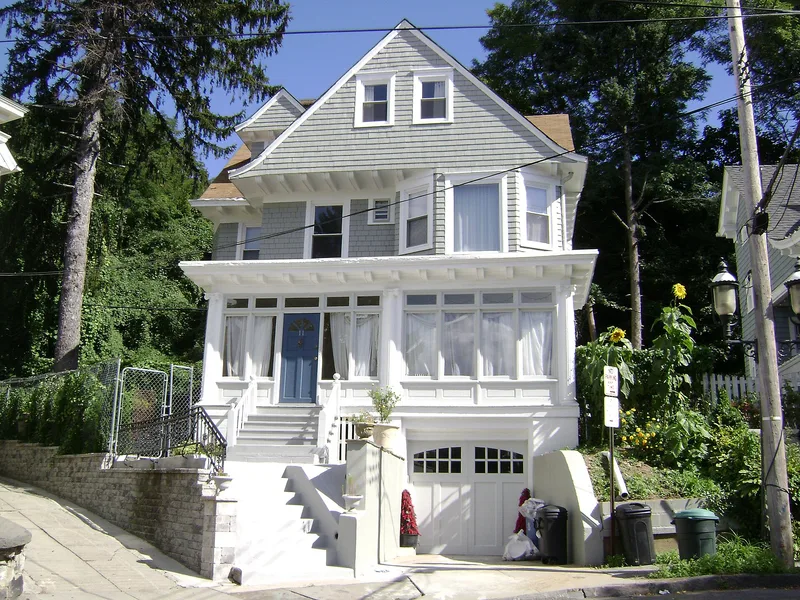
Halcyon Place is a short cul-de-sac in Yonkers, New York, running up a slope east of Warburton Avenue. Its 12 primary houses, built between 1900 and 1924, form a planned suburb laid out by Harry Woodhouse, a local carpenter and builder who bought the Sawyer estate in 1900 and deeded the new street to the city in January 1901. The modest frame and masonry homes were built for middle-class buyers seeking to leave the crowded, industrialized city center. Most are two or two-and-a-half stories and show late Queen Anne, Shingle, Neoclassical, Colonial Revival and Mission styles, with similar massing, setbacks and lot sizes giving the street a unified look. Some houses have had siding changes, storm windows or porch alterations, but the street keeps the character of an early twentieth century neighborhood. The district was listed for its architecture and for its role in the community development of Yonkers as it became a suburban community, in contrast to the altered surroundings.
Machine-generated summary. This summary was generated by a language model from the official nomination document and has not been reviewed line by line by an editor. It may contain errors. Check the source document before relying on any detail. Source: nomination document (PDF) · catalog entry. Generated October 2026 (model claude-sonnet-5-5, prompt v1.0-2026-10-29).
| Period of significance | 1900-1924 |
|---|---|
| Styles | Victorian, Classical Revival, Mission Revival (Queen Anne, Shingle, Neoclassical, Colonial Revival and Mission styles) |
| Areas of significance | Community Planning and Development, Architecture |
| Acreage | 1.5 |
| Boundary source | not published |
| Full listing page | Halcyon Place Historic District (property record) |
What listing means for this property
This is a historic district. Buildings within its boundary are either contributing (they add to the district's significance) or non-contributing. Owners of contributing income-producing buildings can claim the 20% federal rehabilitation tax credit; homeowners should look at state credits. National Register districts impose no design review by themselves; a local historic district ordinance, if one exists, does (the difference explained).
General information, not legal or tax advice. Rules change; confirm with your State Historic Preservation Office or a qualified adviser.