Green-Wood Cemetery

Why it's listed
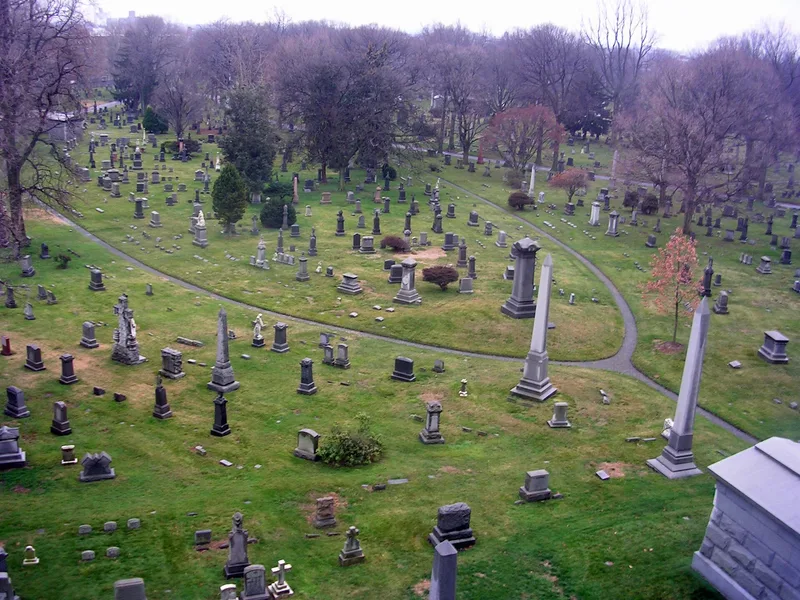
Green-Wood Cemetery occupies 478 acres of hilly land in western Brooklyn, on a glacial moraine that includes the borough's highest point. Incorporated in 1838, it began with 175 acres bought from farmers and was laid out by Major David Bates Douglass as a Picturesque rural cemetery, with winding drives named for plants and landscape features and alternating open lawns and shaded groves. Buildings include Richard Upjohn's Gothic Revival Main Gatehouse of 1861-63 and his Receiving Tomb of 1853, along with a chapel by Warren and Wetmore from 1911-13. About 555,000 people are interred here, among them Samuel Morse, Horace Greeley, Leonard Bernstein and many Civil War generals. The cemetery remains active, and its topography, road network and thousands of monuments continue to show the original design intent. Its broad views of New York Harbor and Manhattan remain notable features. These qualities led to its recognition for landscape design, architecture and association with prominent figures.
Machine-generated summary. This summary was generated by a language model from the official nomination document and has not been reviewed line by line by an editor. It may contain errors. Check the source document before relying on any detail. Source: nomination document (PDF) · catalog entry. Generated October 2026 (model claude-sonnet-5-5, prompt v1.0-2026-10-29).
| Styles | Gothic Revival, Late Gothic Revival, Romanesque Revival, Classic Revival, Renaissance Revival, Eclectic Revival; Picturesque and Landscape Lawn site styles |
|---|---|
| Areas of significance | Architecture, Art, Landscape Architecture |
| Acreage | 478 |
| Boundary source | NPS cultural-resource GIS polygon |
| Full listing page | Green-Wood Cemetery (property record) |
What listing means for this property
This is a historic district. Buildings within its boundary are either contributing (they add to the district's significance) or non-contributing. Owners of contributing income-producing buildings can claim the 20% federal rehabilitation tax credit; homeowners should look at state credits. National Register districts impose no design review by themselves; a local historic district ordinance, if one exists, does (the difference explained).
General information, not legal or tax advice. Rules change; confirm with your State Historic Preservation Office or a qualified adviser.