Grahamsville Historic District

Why it's listed
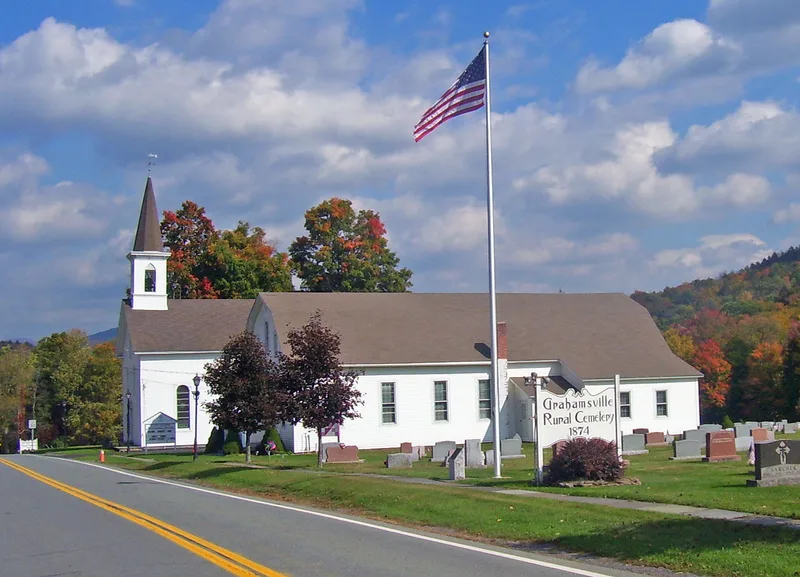
Along Route 55 at the eastern edge of Grahamsville, six properties form a small district that records the brief prosperity of a remote Catskills hamlet. Three large houses stand on the north side: the Greek Revival Marenius Dayton House of the 1820s, once an inn and stagecoach stop; a Gothic Revival cottage built in 1857 by tanner Judge Stoddard Hammond; and an Italianate house built by the Southwick family in the 1880s. Across the road are the former Tannery Store, a modest Greek Revival commercial building now a dwelling, the terraced Grahamsville Rural Cemetery laid out after 1874 in a picturesque style, and the white clapboard Reformed Church of 1882 with its 1935 Memorial Hall. Lumbering and tanning financed much of this building. Modern housing, a reservoir, and a declining village center now surround the group, yet the district remains a cohesive survival of nineteenth-century design.
Machine-generated summary. This summary was generated by a language model from the official nomination document and has not been reviewed line by line by an editor. It may contain errors. Check the source document before relying on any detail. Source: nomination document (PDF) · catalog entry. Generated October 2026 (model claude-sonnet-5-5, prompt v1.0-2026-10-29).
| Period of significance | 1800-1899 |
|---|---|
| Styles | Greek Revival, Gothic Revival, Italianate |
| Areas of significance | Industry, Landscape Architecture, Architecture |
| Acreage | 20 |
| Boundary source | NPS cultural-resource GIS polygon |
| Full listing page | Grahamsville Historic District (property record) |
What listing means for this property
This is a historic district. Buildings within its boundary are either contributing (they add to the district's significance) or non-contributing. Owners of contributing income-producing buildings can claim the 20% federal rehabilitation tax credit; homeowners should look at state credits. National Register districts impose no design review by themselves; a local historic district ordinance, if one exists, does (the difference explained).
General information, not legal or tax advice. Rules change; confirm with your State Historic Preservation Office or a qualified adviser.