Gould-Guggenheim Estate

Why it's listed
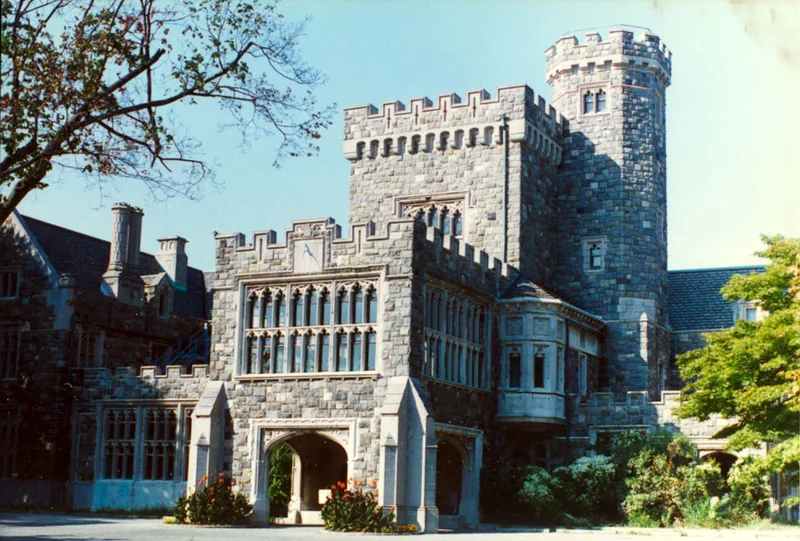
Sands Point Preserve is a 216-acre county park on Long Island Sound in Nassau County, New York. It was assembled from the estates of financier Howard Gould and the Guggenheim family. Gould built a castle-like mansion, later renamed Hempstead House, and a massive granite stable complex designed by Augustus N. Allen around 1902. Daniel Guggenheim bought the property in 1917 and developed it as a working farm with stables, a dairy and thoroughbred horses. His son Harry received part of the land in 1923 and built Falaise, a French Norman manor house by Frederick Sterner and Polhemus & Coffin. Mille Fleur, an eighteenth-century French style house, followed around 1932. Outbuildings include a dairy barn, gate lodge, boathouse, bridges and an iron estate fence. The district is significant as a group of period revival buildings and landscapes that record how wealthy industrial families lived in the early twentieth century. Today the stables serve as the visitor center and museum.
Machine-generated summary. This summary was generated by a language model from the official nomination document and has not been reviewed line by line by an editor. It may contain errors. Check the source document before relying on any detail. Source: nomination document (PDF) · catalog entry. Generated October 2026 (model claude-sonnet-5-5, prompt v1.0-2026-10-29).
| Styles | Late 19th & early 20th Century Revivals |
|---|---|
| Areas of significance | Social History, Architecture |
| Acreage | 216 |
| Boundary source | NPS cultural-resource GIS polygon |
| Full listing page | Gould-Guggenheim Estate (property record) |
What listing means for this property
This is a historic district. Buildings within its boundary are either contributing (they add to the district's significance) or non-contributing. Owners of contributing income-producing buildings can claim the 20% federal rehabilitation tax credit; homeowners should look at state credits. National Register districts impose no design review by themselves; a local historic district ordinance, if one exists, does (the difference explained).
General information, not legal or tax advice. Rules change; confirm with your State Historic Preservation Office or a qualified adviser.