Germania Wine Cellars

Why it's listed
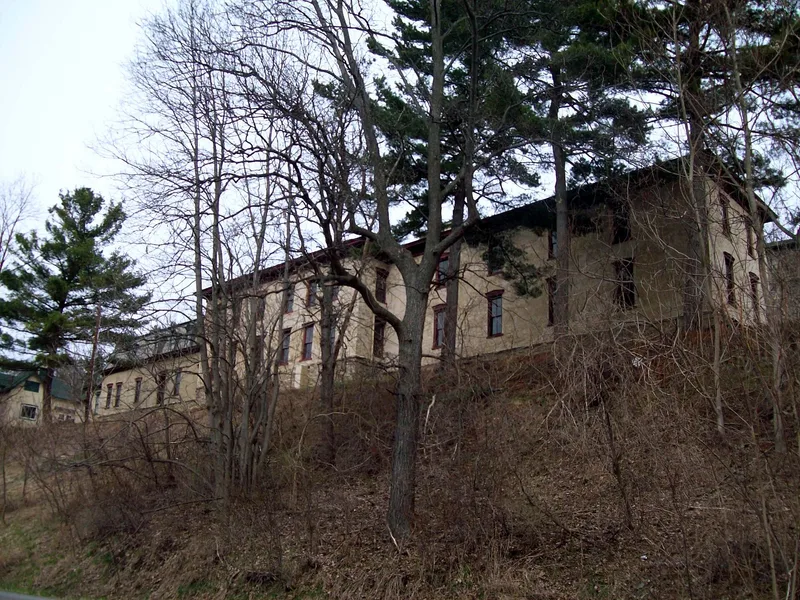
Germania Wine Cellars is a group of nine winery sections on a bluff above Pleasant Valley, south of Hammondsport in Steuben County, New York. Built between 1881 and 1902 and designed by Robert Green Snow and Robert L. Snow, most of the buildings are local rubble stone, some covered in stucco, with a frame carriage barn. Styles include Second Empire, seen in the mansard-roofed original cellar, and Italianate, with pedimented window lintels. The complex began with Jacob Frey, who entered the wine business in 1879 from the cellar of his Hammondsport hotel, and it grew into one of the main Keuka Lake wine producers before Prohibition. The company sold wine and later sacramental wine, and it was sold in 1919 to the Griffenhagen family, who operated it as Monopole. By the mid-1930s they had abandoned it. Later owners used it for storage and a short-lived winery. It is significant for its role in the regional wine industry and for its architecture.
Machine-generated summary. This summary was generated by a language model from the official nomination document and has not been reviewed line by line by an editor. It may contain errors. Check the source document before relying on any detail. Source: nomination document (PDF) · catalog entry. Generated October 2026 (model claude-sonnet-5-5, prompt v1.0-2026-10-29).
| Period of significance | 1881- ca. 1935 |
|---|---|
| Styles | Late Victorian: Second Empire, Italianate |
| Areas of significance | Agriculture, Architecture, Industry |
| Acreage | 4.6 |
| Boundary source | NPS cultural-resource GIS polygon |
| Full listing page | Germania Wine Cellars (property record) |
What listing means for this property
This is a historic district. Buildings within its boundary are either contributing (they add to the district's significance) or non-contributing. Owners of contributing income-producing buildings can claim the 20% federal rehabilitation tax credit; homeowners should look at state credits. National Register districts impose no design review by themselves; a local historic district ordinance, if one exists, does (the difference explained).
Noted as vacant in the nomination. Nomination documents can be decades old; current status may differ. If you are considering buying an empty listed property, read the due-diligence checklist.
General information, not legal or tax advice. Rules change; confirm with your State Historic Preservation Office or a qualified adviser.