Genesee Street Hill-Limestone Plaza Historic District

Why it's listed
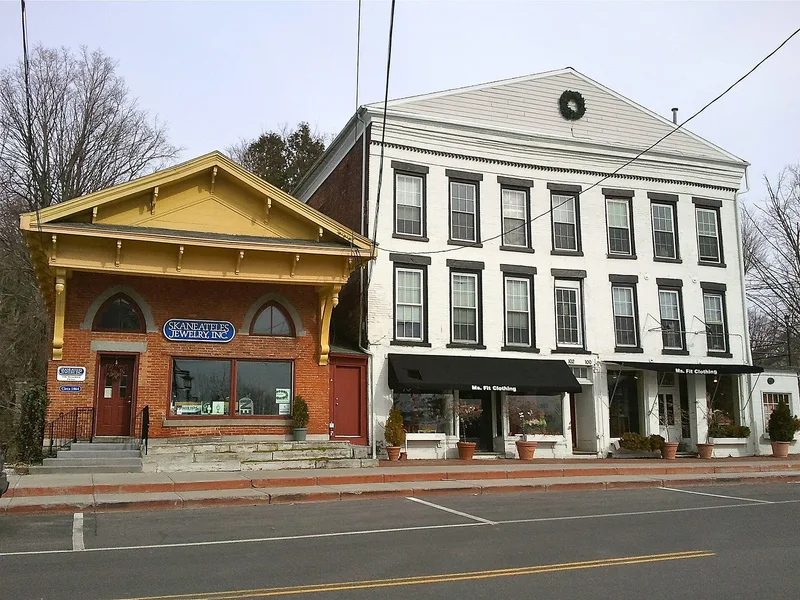
Fayetteville's historic core is a district of 42 buildings along East Genesee Street and around Limestone Plaza, Academy Street and Brooklea Drive. Most date from 1820 to 1885, when the nearby Erie Canal brought prosperity to the village. Brick commercial blocks stand near Limestone Creek, while houses line the hill up to two churches at the eastern edge. The houses show Federal, Greek Revival, Gothic Revival, Italianate, Stick and Colonial Revival styles, yet share a similar scale, setback and materials. Many began as small 1½-story homes that were later enlarged or remodeled. The district has ties to several people: Grover Cleveland lived in a Greek Revival parsonage on Academy Street and worked in a Limestone Plaza store, and Matilda Joslyn Gage's home on East Genesee Street was a center of abolitionist and suffrage activity. Only two modern buildings from the 1960s intrude, and the district retains a notable visual unity.
Machine-generated summary. This summary was generated by a language model from the official nomination document and has not been reviewed line by line by an editor. It may contain errors. Check the source document before relying on any detail. Source: nomination document (PDF) · catalog entry. Generated October 2026 (model claude-sonnet-5-5, prompt v1.0-2026-10-29).
| Period of significance | 1820-1885 |
|---|---|
| Styles | Federal, Greek Revival, Gothic Revival, Italianate, Romanesque Revival, Stick and Colonial Revival |
| Areas of significance | Architecture |
| Acreage | 12 |
| Boundary source | NPS cultural-resource GIS polygon |
| Full listing page | Genesee Street Hill-Limestone Plaza Historic District (property record) |
What listing means for this property
This is a historic district. Buildings within its boundary are either contributing (they add to the district's significance) or non-contributing. Owners of contributing income-producing buildings can claim the 20% federal rehabilitation tax credit; homeowners should look at state credits. National Register districts impose no design review by themselves; a local historic district ordinance, if one exists, does (the difference explained).
General information, not legal or tax advice. Rules change; confirm with your State Historic Preservation Office or a qualified adviser.