Genesee Park Historic District

Why it's listed
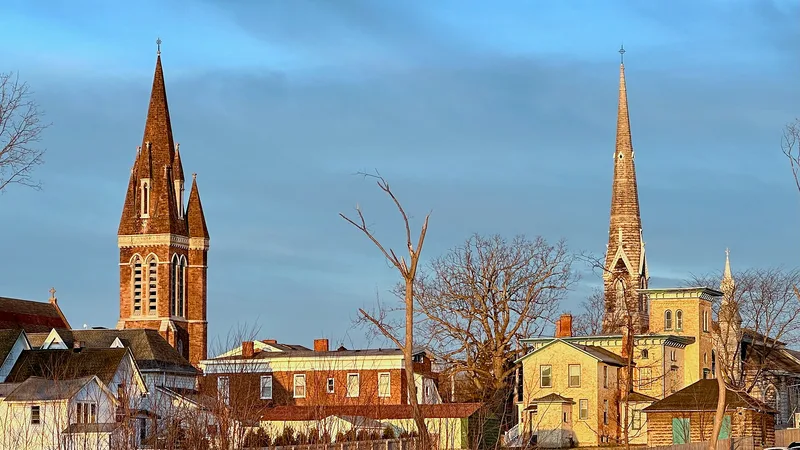
Genesee Park Historic District occupies about 12 acres two blocks north of Geneva's historic commercial core. Its focal point is Genesee Park, a 105-by-247-foot village green created in 1849 after neighbors asked the city for a public open space. Deed restrictions kept the green public and free of buildings, and a cast-iron fence was added in 1871. Around it are two churches and fourteen dwellings, most built between the late 1830s and the 1890s. St. Peter's Episcopal Church (1868), designed by Richard Upjohn in Medina sandstone, has a campanile added in 1878 by his son. The former North Presbyterian Church (1875), by White & Bickford of Elmira, is built of limestone. Houses include temple-front Greek Revival examples, an Italianate house, an Italian Villa, and a Stick style dwelling. Other nearby buildings were heavily altered, so the boundary includes only those that kept their original character. The district reflects the growth of a middle-class neighborhood and a range of nineteenth-century styles.
Machine-generated summary. This summary was generated by a language model from the official nomination document and has not been reviewed line by line by an editor. It may contain errors. Check the source document before relying on any detail. Source: nomination document (PDF) · catalog entry. Generated October 2026 (model claude-sonnet-5-5, prompt v1.0-2026-10-29).
| Period of significance | 1830s-1905 |
|---|---|
| Styles | Greek Revival, Gothic Revival, Italianate, Italian Villa, Stick Style, Tudor Revival |
| Areas of significance | Entertainment/Recreation, Community Planning and Development, Landscape Architecture |
| Acreage | 12 |
| Boundary source | NPS cultural-resource GIS polygon |
| Full listing page | Genesee Park Historic District (property record) |
What listing means for this property
This is a historic district. Buildings within its boundary are either contributing (they add to the district's significance) or non-contributing. Owners of contributing income-producing buildings can claim the 20% federal rehabilitation tax credit; homeowners should look at state credits. National Register districts impose no design review by themselves; a local historic district ordinance, if one exists, does (the difference explained).
General information, not legal or tax advice. Rules change; confirm with your State Historic Preservation Office or a qualified adviser.