General Electric Realty Plot

Why it's listed
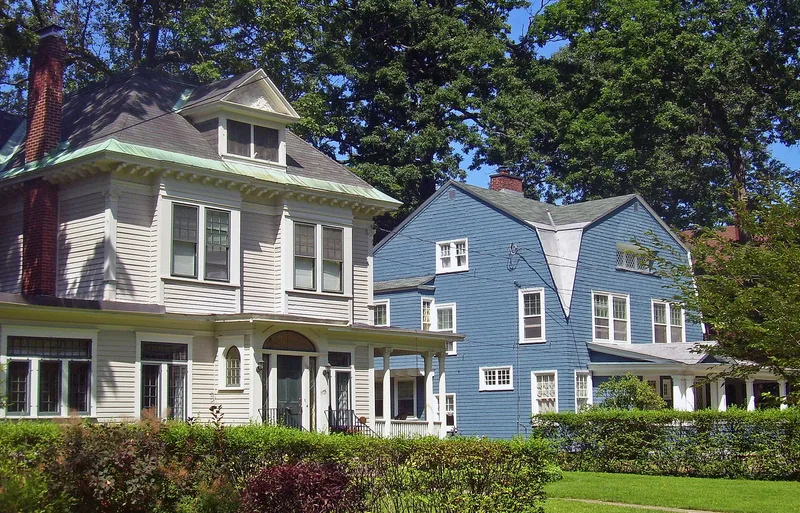
Set on Union Street Hill just east of the Union College campus in Schenectady, this neighborhood of roughly one hundred very large single-family houses was laid out on about seventy-five to ninety acres with ten tree-lined streets. A ravine thirty feet deep, with a stream, crosses the center and is spanned by four arched bridges of Duanesburg blue stone. Lots are at least seventy by one hundred forty feet, and houses sit well back from the street. Most were built between 1900 and 1927, chiefly in Georgian and Colonial Revival designs, with Queen Anne, Shingle, Mission and Tudor examples. Only five later buildings have been added, and they do not intrude on the historic character. The inventory ties many houses to General Electric engineers, inventors and executives. One is described as the site of the first home television reception in 1927, and others as early all-electric homes used to promote electric living. Architects such as W.T.B. Mynderse and Oren Finch designed many of the houses.
Machine-generated summary. This summary was generated by a language model from the official nomination document and has not been reviewed line by line by an editor. It may contain errors. Check the source document before relying on any detail. Source: nomination document (PDF) · catalog entry. Generated October 2026 (model claude-sonnet-5-5, prompt v1.0-2026-10-29).
| Styles | Predominantly Georgian and Colonial Revival, with good examples of Queen Anne, Shingle and Mission styles; also some Tudor Revival. |
|---|---|
| Areas of significance | Architecture, Invention |
| Acreage | 90 |
| Boundary source | NPS cultural-resource GIS polygon |
| Full listing page | General Electric Realty Plot (property record) |
What listing means for this property
This is a historic district. Buildings within its boundary are either contributing (they add to the district's significance) or non-contributing. Owners of contributing income-producing buildings can claim the 20% federal rehabilitation tax credit; homeowners should look at state credits. National Register districts impose no design review by themselves; a local historic district ordinance, if one exists, does (the difference explained).
General information, not legal or tax advice. Rules change; confirm with your State Historic Preservation Office or a qualified adviser.