Garrison Landing Historic District

Why it's listed
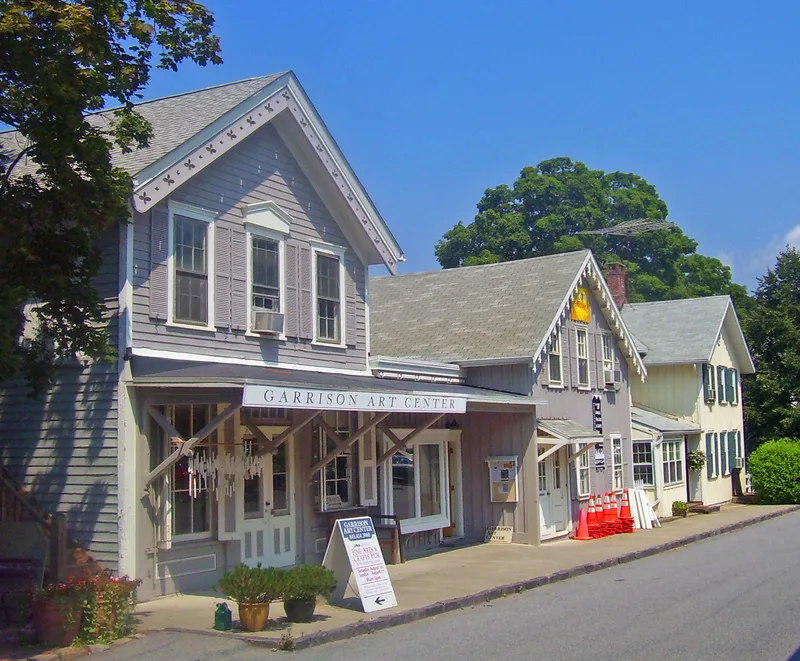
Garrison Landing is a small riverside hamlet of seventeen structures stretched along a quarter-mile of the Hudson's east bank, directly across from West Point. Most buildings date from the mid-19th century, when the landing served river commerce and the railroad. Henry White Belcher, owner of the Garrison and West Point Ferry Company, built many of the modest frame houses between 1849 and 1859 for his employees, giving the community a unified character. Key landmarks include an 1892 stone railroad station, now a theater, an older frame depot moved nearby, an intact frame store with its original storefront, and the brick Golden Eagle Hotel, still operating. Daily trips to West Point and Highland Falls brought mail, food, baggage and freight to the west shore. The grassy common behind the buildings holds a gazebo built for the 1960s filming of Hello Dolly. The district is valued as an intact, picturesque example of a Hudson River landing community.
Machine-generated summary. This summary was generated by a language model from the official nomination document and has not been reviewed line by line by an editor. It may contain errors. Check the source document before relying on any detail. Source: nomination document (PDF) · catalog entry. Generated October 2026 (model claude-sonnet-5-5, prompt v1.0-2026-10-29).
| Styles | Mid-19th century vernacular with Italianate, Gothic and bracketed elements (Hudson Valley vocabulary) |
|---|---|
| Areas of significance | Architecture, Social History |
| Acreage | 5.3 |
| Boundary source | NPS cultural-resource GIS polygon |
| Full listing page | Garrison Landing Historic District (property record) |
What listing means for this property
This is a historic district. Buildings within its boundary are either contributing (they add to the district's significance) or non-contributing. Owners of contributing income-producing buildings can claim the 20% federal rehabilitation tax credit; homeowners should look at state credits. National Register districts impose no design review by themselves; a local historic district ordinance, if one exists, does (the difference explained).
General information, not legal or tax advice. Rules change; confirm with your State Historic Preservation Office or a qualified adviser.