Garrison Grist Mill Historic District

Why it's listed
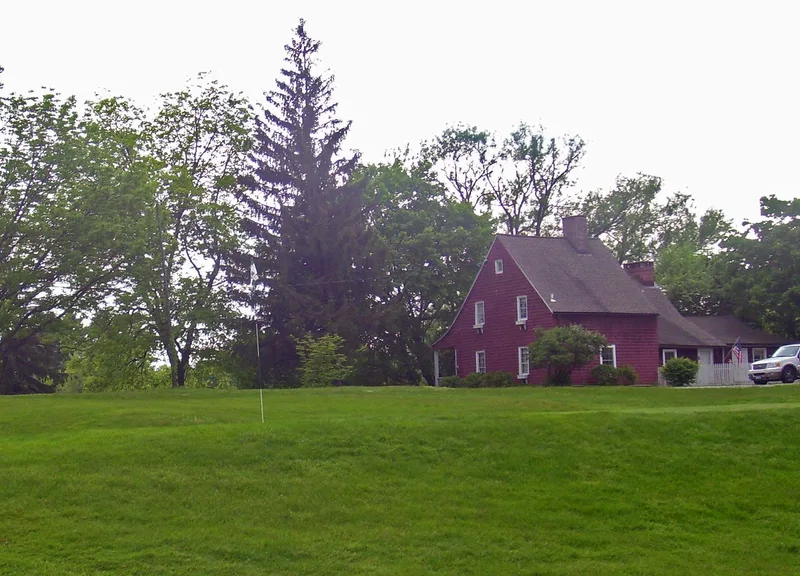
Set among the fairways of a golf course near Garrison Four Corners, this 13.4-acre district preserves a small eighteenth-century farm complex from the Hudson Highlands. It includes a one-and-a-half-story frame farmhouse with a steeply pitched Dutch-style roof, a roughly fifty-foot-square Dutch barn with large H-frame bents, a two-and-a-half-story heavy timber grist mill, and a quarried stone dam that creates a millpond. Exact construction dates are unknown, but the buildings are thought to date from the mid- to late eighteenth century, possibly connected to the tenant farm established by Jacob Mandeville on Philipse family land. The group was listed for architecture because such intact collections are rare in the mid-Hudson region, and a Dutch barn is unusual in the Highlands. The farmhouse and mill were documented by the Historic American Buildings Survey in 1934. The mill is now deteriorated, though much of its milling equipment remains in the attic and basement.
Machine-generated summary. This summary was generated by a language model from the official nomination document and has not been reviewed line by line by an editor. It may contain errors. Check the source document before relying on any detail. Source: nomination document (PDF) · catalog entry. Generated October 2026 (model claude-sonnet-5-5, prompt v1.0-2026-10-29).
| Period of significance | ca. 1740-1898 |
|---|---|
| Styles | Farmhouse: Colonial/Dutch Colonial; Dutch barn, grist mill and dam: No style |
| Areas of significance | Architecture |
| Acreage | 13 |
| Boundary source | NPS cultural-resource GIS polygon |
| Full listing page | Garrison Grist Mill Historic District (property record) |
What listing means for this property
This is a historic district. Buildings within its boundary are either contributing (they add to the district's significance) or non-contributing. Owners of contributing income-producing buildings can claim the 20% federal rehabilitation tax credit; homeowners should look at state credits. National Register districts impose no design review by themselves; a local historic district ordinance, if one exists, does (the difference explained).
General information, not legal or tax advice. Rules change; confirm with your State Historic Preservation Office or a qualified adviser.