Fulton Ferry District

Why it's listed
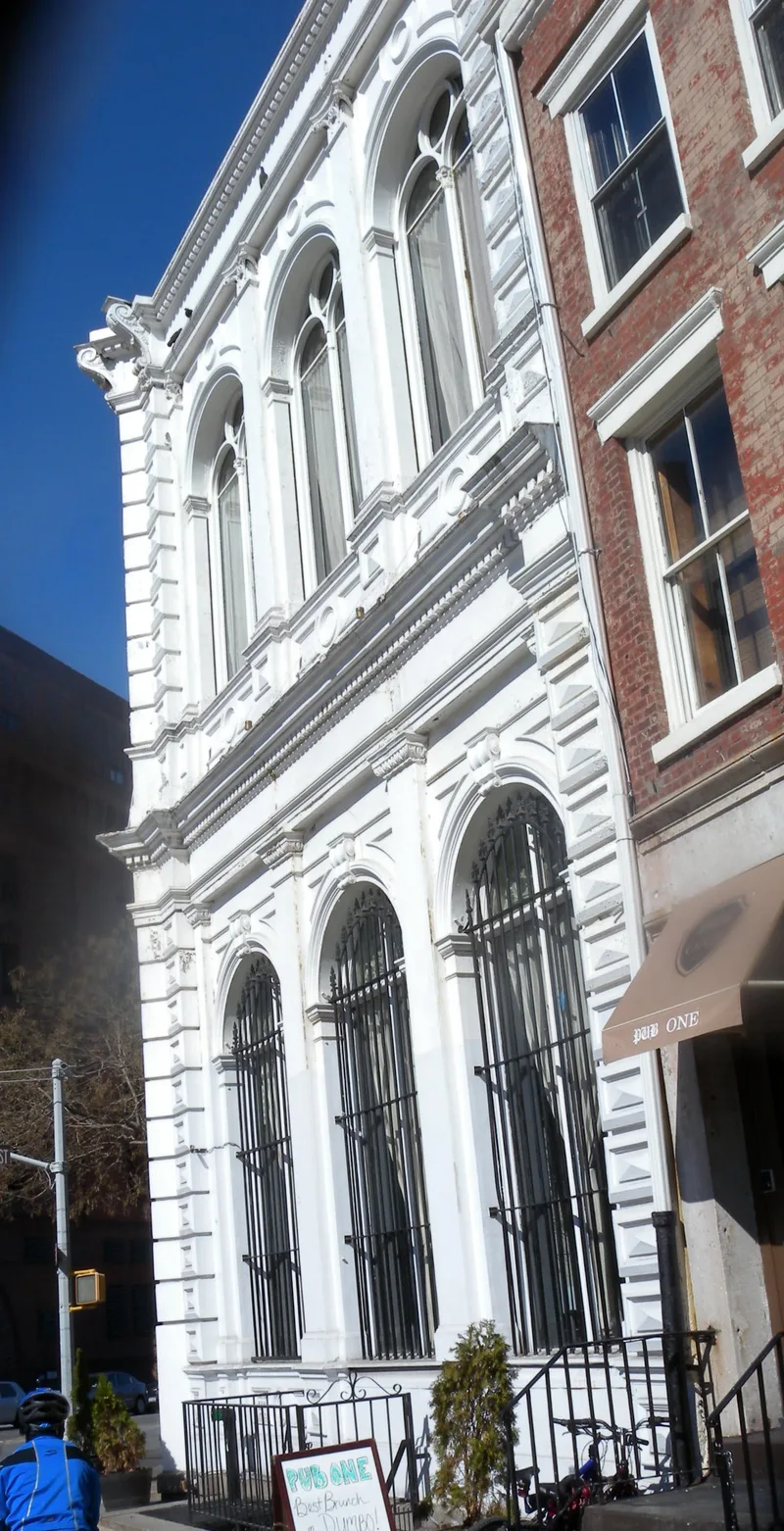
Fulton Ferry District occupies a point of land on Brooklyn's East River shore, opposite lower Manhattan. It was the core of Brooklyn's early commercial center, tied to a ferry crossing first established in 1642. The district follows lower Fulton Street and Water Street and holds commercial and warehouse buildings dating from 1830 to 1895, mostly brick and two to four stories tall. Notable examples include the 1830s buildings at 85 Water Street and 5-7 Front Street, a row of 1837-1839 buildings on Fulton Street, the 1860-61 Brooklyn City and Newtown Railroad Company Building, an 1869 cast-iron bank facade, the Empire Stores coffee and sugar warehouses designed by Thomas Stone, and the seven-story Eagle Warehouse by Frank Freeman, built in 1893. After the Brooklyn Bridge opened in 1883, the ferry declined and the waterfront became a warehouse and light industrial area. City plans called for preserving its character and reusing its buildings.
Machine-generated summary. This summary was generated by a language model from the official nomination document and has not been reviewed line by line by an editor. It may contain errors. Check the source document before relying on any detail. Source: nomination document (PDF) · catalog entry. Generated October 2026 (model claude-sonnet-5-5, prompt v1.0-2026-10-29).
| Period of significance | 19th Century |
|---|---|
| Styles | Commercial 19th century styles, including cast-iron classical and Richardsonian Romanesque |
| Areas of significance | Commerce, Transportation, Architecture |
| Acreage | 16 |
| Boundary source | NPS cultural-resource GIS polygon |
| Full listing page | Fulton Ferry District (property record) |
What listing means for this property
This is a historic district. Buildings within its boundary are either contributing (they add to the district's significance) or non-contributing. Owners of contributing income-producing buildings can claim the 20% federal rehabilitation tax credit; homeowners should look at state credits. National Register districts impose no design review by themselves; a local historic district ordinance, if one exists, does (the difference explained).
General information, not legal or tax advice. Rules change; confirm with your State Historic Preservation Office or a qualified adviser.