French Portage Road Historic District

Why it's listed
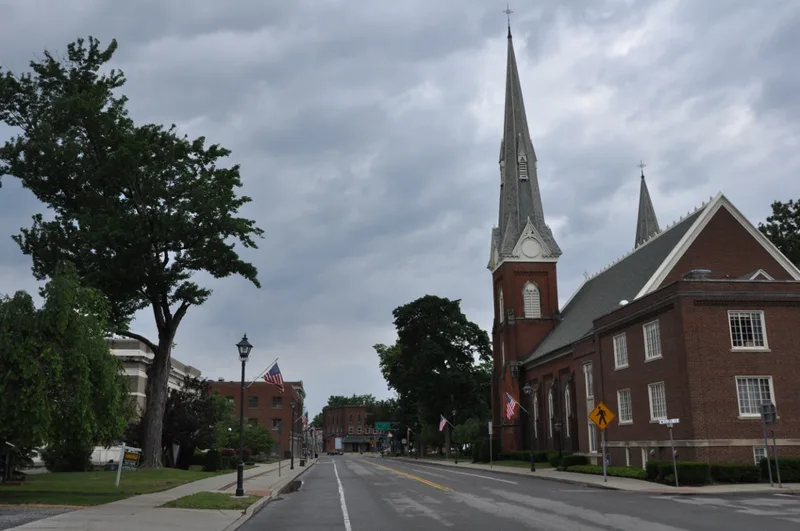
Westfield's historic core in Chautauqua County, New York, is a district of 104 buildings gathered around the village common and along South Portage and East Main Streets. Portage Road follows much the same course as the old Portage Trail, which seventeenth-century French explorers used to travel from the Great Lakes toward the Ohio River. Settlement began early in the nineteenth century, and the brick McClurg Mansion, built in the first quarter of that century, still stands at the center of the common as the village museum. East Main Street holds a continuous row of 1860s and 1870s brick commercial buildings with cast-iron detailing, while nearby streets display Greek Revival, Gothic Revival, Italianate, Octagon, Queen Anne and Colonial Revival houses. A commercial block rose after a 1909 fire, and the Welch Grape Juice Company added office buildings. The district is significant for its intact streetscapes, architectural variety and links to early French exploration and village growth.
Machine-generated summary. This summary was generated by a language model from the official nomination document and has not been reviewed line by line by an editor. It may contain errors. Check the source document before relying on any detail. Source: nomination document (PDF) · catalog entry. Generated October 2026 (model claude-sonnet-5-5, prompt v1.0-2026-10-29).
| Styles | Mixed: Greek Revival, Gothic Revival, Italianate, Italian Villa, Octagon, Queen Anne, Colonial Revival, Academic Revival, Art Moderne and vernacular |
|---|---|
| Areas of significance | Architecture |
| Acreage | 52 |
| Boundary source | NPS cultural-resource GIS polygon |
| Full listing page | French Portage Road Historic District (property record) |
What listing means for this property
This is a historic district. Buildings within its boundary are either contributing (they add to the district's significance) or non-contributing. Owners of contributing income-producing buildings can claim the 20% federal rehabilitation tax credit; homeowners should look at state credits. National Register districts impose no design review by themselves; a local historic district ordinance, if one exists, does (the difference explained).
General information, not legal or tax advice. Rules change; confirm with your State Historic Preservation Office or a qualified adviser.