Fort Tryon Park and the Cloisters

Why it's listed
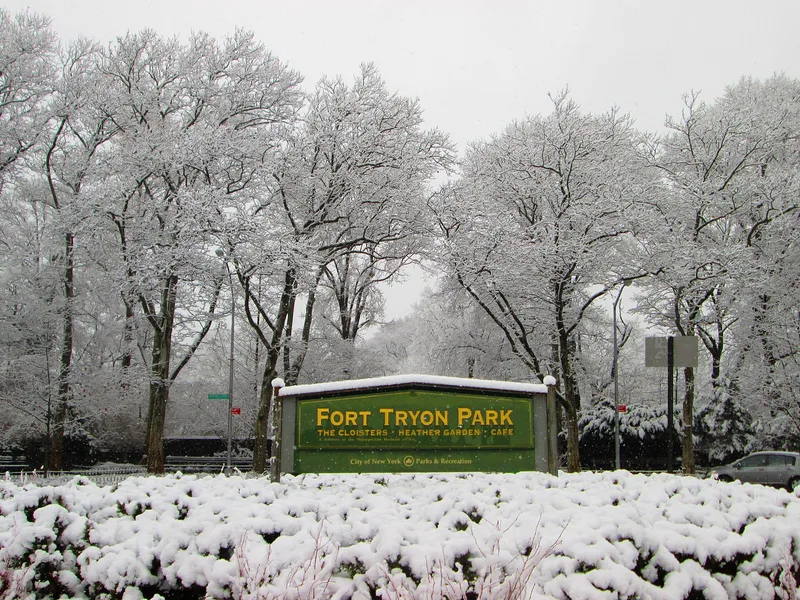
Fort Tryon Park covers about 66.5 acres of rocky, wooded high ground in northwestern Manhattan, with long views across the Hudson River to the Palisades. The site holds the remains of a Revolutionary War outwork where Margaret Corbin made her stand, and a shell heap suggesting earlier Native American use. Early in the twentieth century only a few large estates occupied the land. John D. Rockefeller Jr. bought them, gave the park to the city, and kept about four acres for The Cloisters. Frederick Law Olmsted Jr. designed the landscape around the natural terrain, with pathways, terraces, gardens and a heather garden. The Cloisters, designed by Charles Collens and built between 1935 and 1938, serves as the park's focal point. It incorporates medieval cloisters, chapels and apses brought from France and Spain. Utilitarian ashlar structures built by the Parks Department in the 1930s complete the district.
Machine-generated summary. This summary was generated by a language model from the official nomination document and has not been reviewed line by line by an editor. It may contain errors. Check the source document before relying on any detail. Source: nomination document (PDF) · catalog entry. Generated October 2026 (model claude-sonnet-5-5, prompt v1.0-2026-10-29).
| Period of significance | 1700-1799; 1935-1938 (The Cloisters) |
|---|---|
| Styles | Neo-Norman and neo-Gothic details; medieval-inspired design echoing southern French monastic architecture |
| Areas of significance | Landscape Architecture, Art, Conservation, Military, Education, Architecture |
| Acreage | 66.5 |
| Boundary source | NPS cultural-resource GIS polygon |
| Full listing page | Fort Tryon Park and the Cloisters (property record) |
What listing means for this property
This is a historic district. Buildings within its boundary are either contributing (they add to the district's significance) or non-contributing. Owners of contributing income-producing buildings can claim the 20% federal rehabilitation tax credit; homeowners should look at state credits. National Register districts impose no design review by themselves; a local historic district ordinance, if one exists, does (the difference explained).
General information, not legal or tax advice. Rules change; confirm with your State Historic Preservation Office or a qualified adviser.