Fort Tilden Historic District

Why it's listed
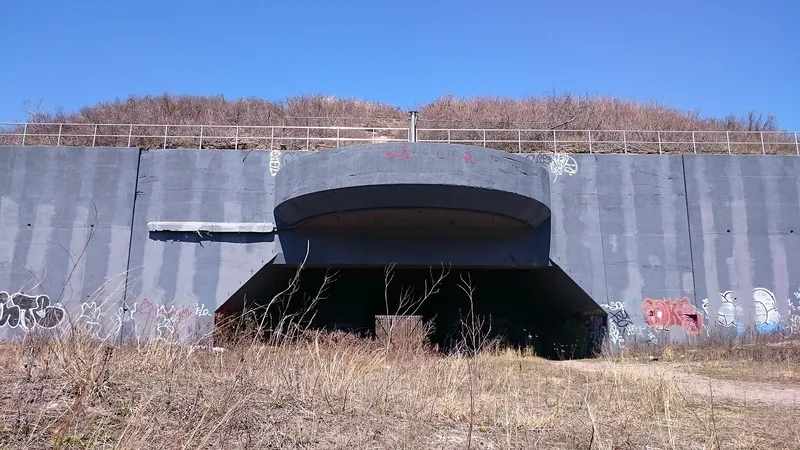
Fort Tilden occupies the Rockaway Peninsula in Queens and was founded by the U.S. Army in 1917, shortly after Germany resumed submarine warfare. The district contains World War II era gun emplacements, shell magazines, igloo magazines and earth-covered concrete bunkers, along with Nike missile silos and radar tracking towers from the 1950s. The two casemates of Battery Harris, each built to hold a 16-inch gun, were covered with earth so they resemble sand hills. Fort Tilden worked with Fort Hancock on Sandy Hook as the outer defense of New York Harbor. Its structures record the shift from open coastal guns to bomb-resistant casemates and then to guided missiles as warfare changed. Air defense facilities were deactivated around 1967, and the fort's resources were never used in action against an enemy. Much of the western part of the post is now neglected, with sand and vegetation encroaching on the deteriorating structures. The National Park Service holds most of the land today.
Machine-generated summary. This summary was generated by a language model from the official nomination document and has not been reviewed line by line by an editor. It may contain errors. Check the source document before relying on any detail. Source: nomination document (PDF) · catalog entry. Generated October 2026 (model claude-sonnet-5-5, prompt v1.0-2026-10-29).
| Areas of significance | Military |
|---|---|
| Acreage | 98 |
| Boundary source | NPS cultural-resource GIS polygon |
| Full listing page | Fort Tilden Historic District (property record) |
What listing means for this property
This is a historic district. Buildings within its boundary are either contributing (they add to the district's significance) or non-contributing. Owners of contributing income-producing buildings can claim the 20% federal rehabilitation tax credit; homeowners should look at state credits. National Register districts impose no design review by themselves; a local historic district ordinance, if one exists, does (the difference explained).
General information, not legal or tax advice. Rules change; confirm with your State Historic Preservation Office or a qualified adviser.