Fort Schuyler

Why it's listed
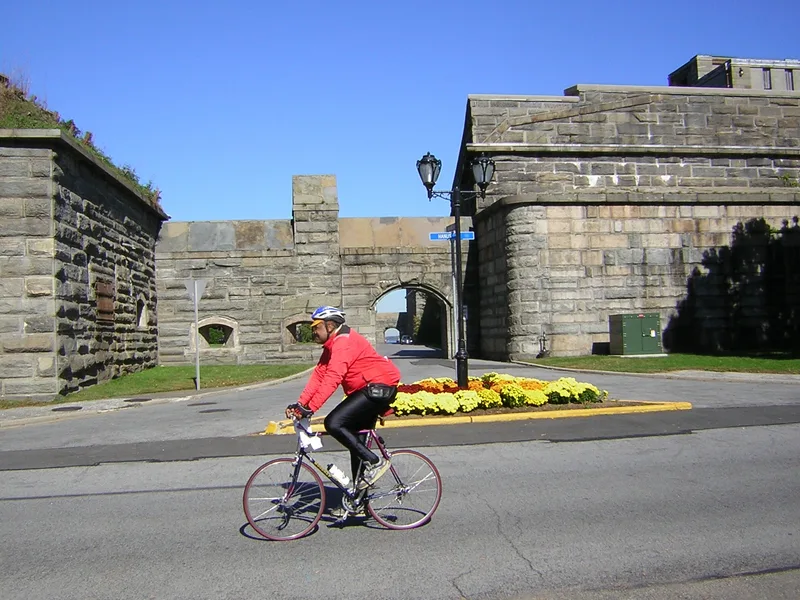
Fort Schuyler occupies the tip of Throg's Neck, where the East River meets Long Island Sound in the Bronx. Construction began in 1833 under Captain I.L. Smith of the Army engineers, and the grey granite fort, an irregular pentagon with bastions, casemates and a drawbridge, was ready for its guns in December 1845. Armament was completed in 1856. Named for General Philip Schuyler, it was meant to defend New York City, yet its garrison never fired its guns in anger. After the army left in 1934, the fort was restored between 1934 and 1938 as the home of the state merchant marine academy, now the State University of New York Maritime College. Although the interior was completely rebuilt, the exterior remains essentially intact. Nearby are five officers' quarters from 1878, a brick warehouse contemporary with the fort, and stone outerworks. Together they illustrate nineteenth-century coastal defense and a successful example of adaptive reuse.
Machine-generated summary. This summary was generated by a language model from the official nomination document and has not been reviewed line by line by an editor. It may contain errors. Check the source document before relying on any detail. Source: nomination document (PDF) · catalog entry. Generated October 2026 (model claude-sonnet-5-5, prompt v1.0-2026-10-29).
| Period of significance | 1833-1856 |
|---|---|
| Areas of significance | Military, Architecture |
| Acreage | 17 |
| Boundary source | NPS cultural-resource GIS polygon |
| Full listing page | Fort Schuyler (property record) |
What listing means for this property
This is a historic district. Buildings within its boundary are either contributing (they add to the district's significance) or non-contributing. Owners of contributing income-producing buildings can claim the 20% federal rehabilitation tax credit; homeowners should look at state credits. National Register districts impose no design review by themselves; a local historic district ordinance, if one exists, does (the difference explained).
General information, not legal or tax advice. Rules change; confirm with your State Historic Preservation Office or a qualified adviser.