Forest Lawn Cemetery

Why it's listed
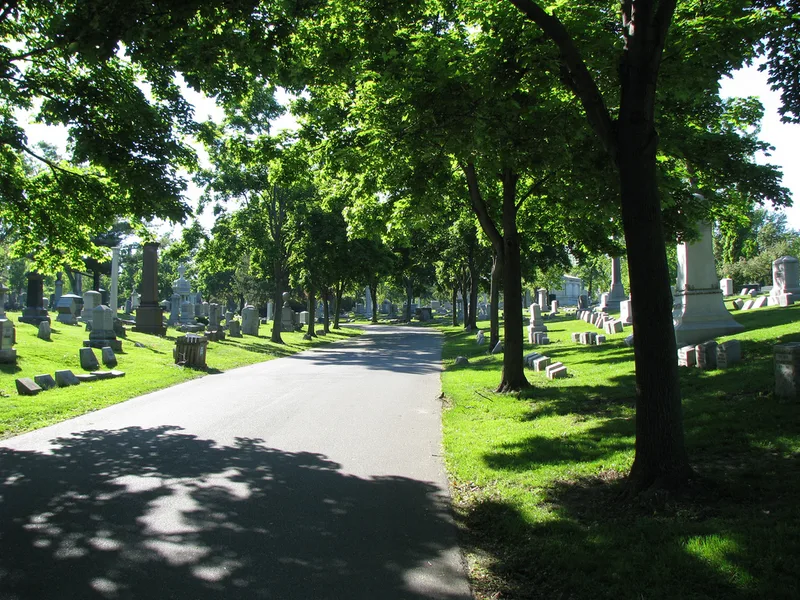
Forest Lawn Cemetery covers 267 acres in the center of Buffalo, about three miles from downtown. Its winding roads, lakes, creek and rolling bluffs follow the rural cemetery tradition, and a wrought iron fence encloses the grounds. The landscape began with a design by Charles C. Clarke, and engineer Joseph Earnshaw later expanded the road network. Buildings and structures include a Gothic limestone chapel from 1882, a Neo-classical administration building from 1907 by George Cary, a Beaux Arts Main Street gate from 1901 by Henry Osgood Holland, a Colonial Revival superintendent's residence, and four limestone arch bridges. Mausolea and monuments, among them the Letchworth-Skinner mausoleum, the Blocher memorial and the Orson Phelps monument, display Greek, Gothic, Romanesque and Egyptian Revival styles. Millard Fillmore is buried here. The cemetery was listed as a district for its landscape design and its funerary art, which together record regional burial customs from about 1850 to 1940.
Machine-generated summary. This summary was generated by a language model from the official nomination document and has not been reviewed line by line by an editor. It may contain errors. Check the source document before relying on any detail. Source: nomination document (PDF) · catalog entry. Generated October 2026 (model claude-sonnet-5-5, prompt v1.0-2026-10-29).
| Styles | Rural cemetery |
|---|---|
| Areas of significance | Landscape Architecture, Art, Architecture |
| Acreage | 267 |
| Boundary source | NPS cultural-resource GIS polygon |
| Full listing page | Forest Lawn Cemetery (property record) |
What listing means for this property
This is a historic district. Buildings within its boundary are either contributing (they add to the district's significance) or non-contributing. Owners of contributing income-producing buildings can claim the 20% federal rehabilitation tax credit; homeowners should look at state credits. National Register districts impose no design review by themselves; a local historic district ordinance, if one exists, does (the difference explained).
General information, not legal or tax advice. Rules change; confirm with your State Historic Preservation Office or a qualified adviser.