Forest Home Historic District

Why it's listed
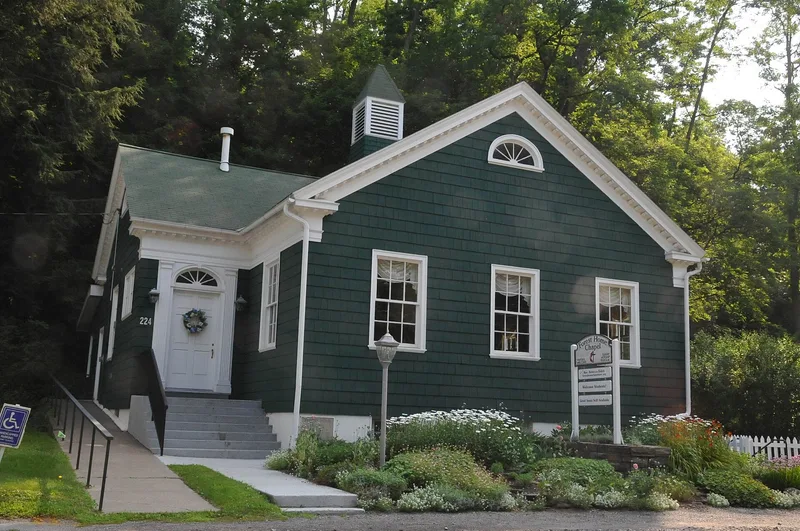
Forest Home is a compact hamlet on both sides of Fall Creek, just east of Ithaca and Cornell University, and its core is preserved as a historic district. Originally called Free Hollow, it grew in the second quarter of the nineteenth century around mills powered by the creek, including grist, woolen, knitting and paper mills. Workers lived in small Federal and Greek Revival cottages, and several mill buildings were later converted to homes. Remains of the Empire and Red Grist Mills survive. As the mills declined by the 1890s, the hamlet became a favored home for Cornell agricultural college professors, and dozens of Queen Anne and Colonial Revival style houses went up, many built by contractor William McElwee, Sr. The district also includes the 1915 Forest Home Chapel, a 1921 school, bridges dating from 1904 and 1909, the stone-clad Sackett Bridge, and a 1913 concrete dam. In all, 81 resources contribute to its character.
Machine-generated summary. This summary was generated by a language model from the official nomination document and has not been reviewed line by line by an editor. It may contain errors. Check the source document before relying on any detail. Source: nomination document (PDF) · catalog entry. Generated October 2026 (model claude-sonnet-5-5, prompt v1.0-2026-10-29).
| Styles | Federal, Greek Revival, Queen Anne-Eastlake, Colonial Revival, Bungalow, and vernacular |
|---|---|
| Areas of significance | Community Planning and Development, Industry, Architecture, Agriculture |
| Acreage | 50 |
| Boundary source | NPS cultural-resource GIS polygon |
| Full listing page | Forest Home Historic District (property record) |
What listing means for this property
This is a historic district. Buildings within its boundary are either contributing (they add to the district's significance) or non-contributing. Owners of contributing income-producing buildings can claim the 20% federal rehabilitation tax credit; homeowners should look at state credits. National Register districts impose no design review by themselves; a local historic district ordinance, if one exists, does (the difference explained).
General information, not legal or tax advice. Rules change; confirm with your State Historic Preservation Office or a qualified adviser.