Fernwood Park Historic District

Why it's listed
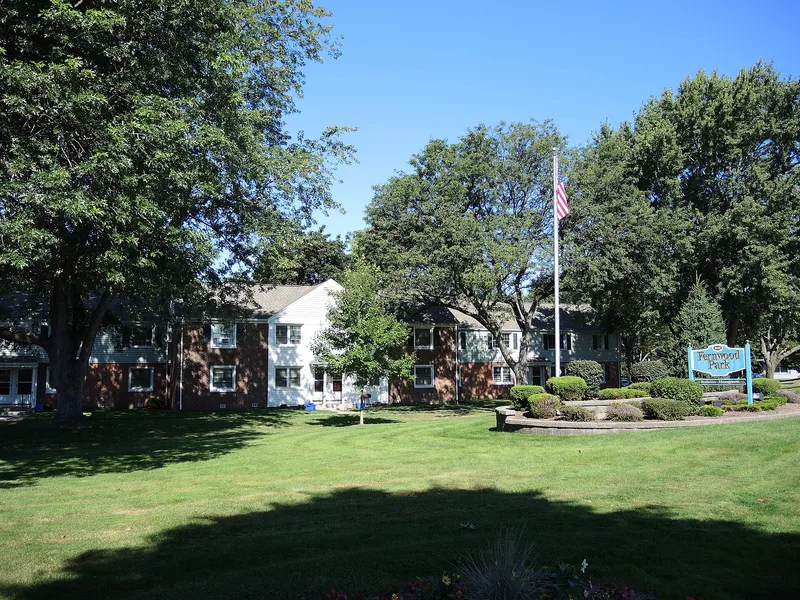
Fernwood Park is a 1947 garden apartment complex on a triangular 10-acre plot in northeast Rochester. It holds 38 two-story brick and vinyl-clad buildings with four units each, 152 apartments in all, arranged in three clusters around lawns, walkways and a children's play area. Each apartment has its own entrance, and the buildings are offset so that rooms receive light and air. The complex was the first of three projects under the Rochester Plan, a postwar effort in which eight local banks formed a non-profit corporation to build low-rent housing for veterans on city-provided land, financed by an FHA-insured mortgage. Architect C. Storrs Barrows designed the vernacular Colonial Revival buildings, and landscape architect Francis Hastings Gott planned the grounds. Buildings and landscaping take up roughly 30 percent of the site, leaving 70 percent as green space. Its design reflects Garden City Movement ideas and the federal garden apartment model, which is why it is recognized for both its planning and its architecture.
Machine-generated summary. This summary was generated by a language model from the official nomination document and has not been reviewed line by line by an editor. It may contain errors. Check the source document before relying on any detail. Source: nomination document (PDF) · catalog entry. Generated October 2026 (model claude-sonnet-5-5, prompt v1.0-2026-10-29).
| Period of significance | 1947 |
|---|---|
| Styles | Colonial Revival |
| Areas of significance | Architecture, Community Planning and Development, Social History |
| Acreage | 10 |
| Boundary source | NPS cultural-resource GIS polygon |
| Full listing page | Fernwood Park Historic District (property record) |
What listing means for this property
This is a historic district. Buildings within its boundary are either contributing (they add to the district's significance) or non-contributing. Owners of contributing income-producing buildings can claim the 20% federal rehabilitation tax credit; homeowners should look at state credits. National Register districts impose no design review by themselves; a local historic district ordinance, if one exists, does (the difference explained).
General information, not legal or tax advice. Rules change; confirm with your State Historic Preservation Office or a qualified adviser.