Evangelical Lutheran Church of St. Peter

The National Park Service has not published a boundary polygon for this district; the map shows the listed properties inside it and the district's reference point.
Why it's listed
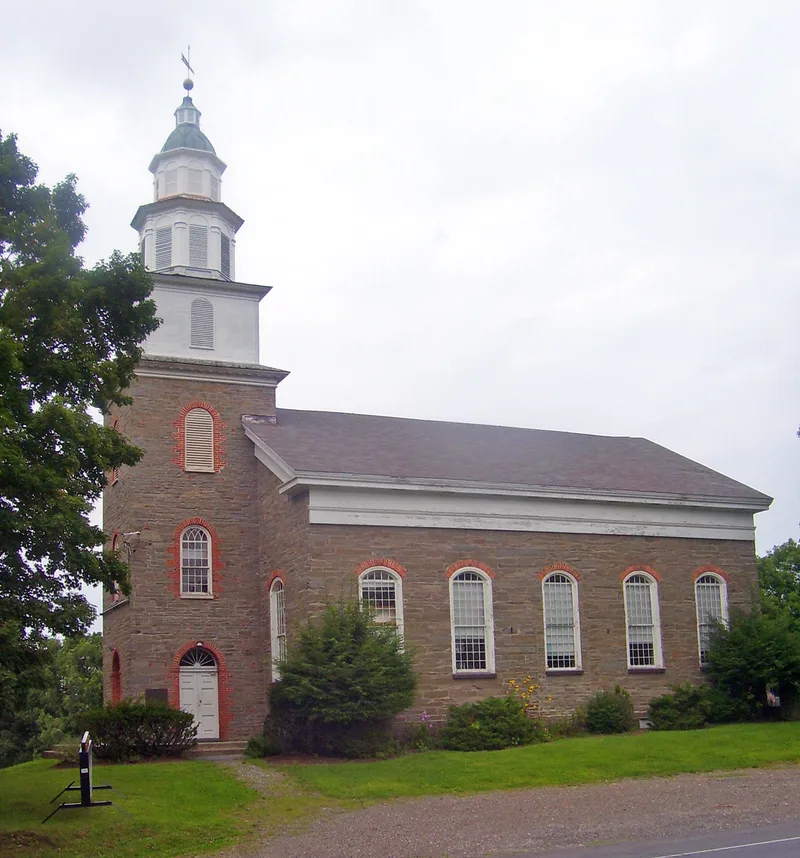
Beside the old New York–Albany Post Road north of Rhinebeck, a fieldstone church, a frame parsonage and a small schoolhouse stand together in a rural setting. The church was built in 1786 by a Lutheran congregation descended from Palatine refugees who settled on Beekman lands. In 1823-24 the builder Stephen McCarty reworked it for $3,000, moving the entrance to the south end, adding aisles and a new pulpit, and raising a four-stage tower. The parsonage, built in 1798 for Reverend Fredrich Quitman, is a two-story frame house with brick nogging; his son John Quitman, later a Mexican War general and Mississippi governor, was born there. The schoolhouse dates from about 1833. As nearby Red Hook and Rhinebeck grew, the congregation declined, and the buildings stayed in their rural context. Today the church hosts occasional meetings, the schoolhouse is a museum, and a civic group uses the parsonage.
Machine-generated summary. This summary was generated by a language model from the official nomination document and has not been reviewed line by line by an editor. It may contain errors. Check the source document before relying on any detail. Source: nomination document (PDF) · catalog entry. Generated October 2026 (model claude-sonnet-5-5, prompt v1.0-2026-10-29).
| Styles | Vernacular ecclesiastical architecture; parsonage mantels in a vernacular Federal style |
|---|---|
| Areas of significance | Architecture |
| Acreage | 7 |
| Boundary source | not published |
| Full listing page | Evangelical Lutheran Church of St. Peter (property record) |
What listing means for this property
This is a historic district. Buildings within its boundary are either contributing (they add to the district's significance) or non-contributing. Owners of contributing income-producing buildings can claim the 20% federal rehabilitation tax credit; homeowners should look at state credits. National Register districts impose no design review by themselves; a local historic district ordinance, if one exists, does (the difference explained).
General information, not legal or tax advice. Rules change; confirm with your State Historic Preservation Office or a qualified adviser.