Essex Village Historic District

Why it's listed
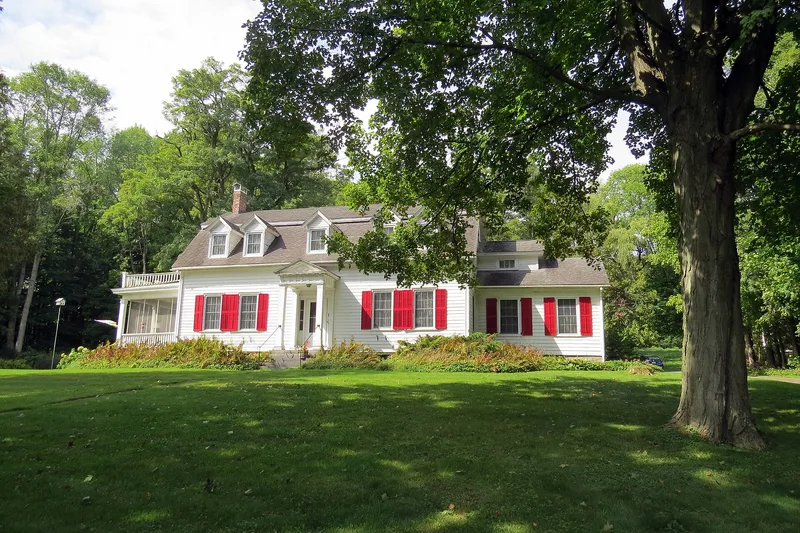
Essex Village is a lakeside community on the western shore of Lake Champlain, covering about 48 acres and roughly 150 buildings that predate the 20th century. Settled in the 1780s by William Gilliland and his son-in-law Daniel Ross, it became in the 1820s a busy port that shipped timber, iron, cattle and hides. Shipyards here built sloops and row galleys for the 1812 campaign on Champlain. Prosperity left a concentration of Federal, Greek Revival and early Victorian houses, inns, churches and commercial buildings, built of clapboard, brick and native limestone and rising no higher than two and a half stories. After the Civil War, railroads and industrial change caused a long economic decline. Little new building followed, so older structures were kept and mostly left unaltered. Examples include Wright's Inn of 1798, the stone library of 1818, the 1853 Federated Church and the Greek Revival Stafford-Spear house. The village is valued as a whole, without intrusive modern elements.
Machine-generated summary. This summary was generated by a language model from the official nomination document and has not been reviewed line by line by an editor. It may contain errors. Check the source document before relying on any detail. Source: nomination document (PDF) · catalog entry. Generated October 2026 (model claude-sonnet-5-5, prompt v1.0-2026-10-29).
| Styles | Federal, Greek Revival, and early Victorian |
|---|---|
| Areas of significance | Industry, Commerce, Architecture |
| Acreage | 48 |
| Boundary source | NPS cultural-resource GIS polygon |
| Full listing page | Essex Village Historic District (property record) |
What listing means for this property
This is a historic district. Buildings within its boundary are either contributing (they add to the district's significance) or non-contributing. Owners of contributing income-producing buildings can claim the 20% federal rehabilitation tax credit; homeowners should look at state credits. National Register districts impose no design review by themselves; a local historic district ordinance, if one exists, does (the difference explained).
General information, not legal or tax advice. Rules change; confirm with your State Historic Preservation Office or a qualified adviser.