East Williston Village Historic District

Why it's listed
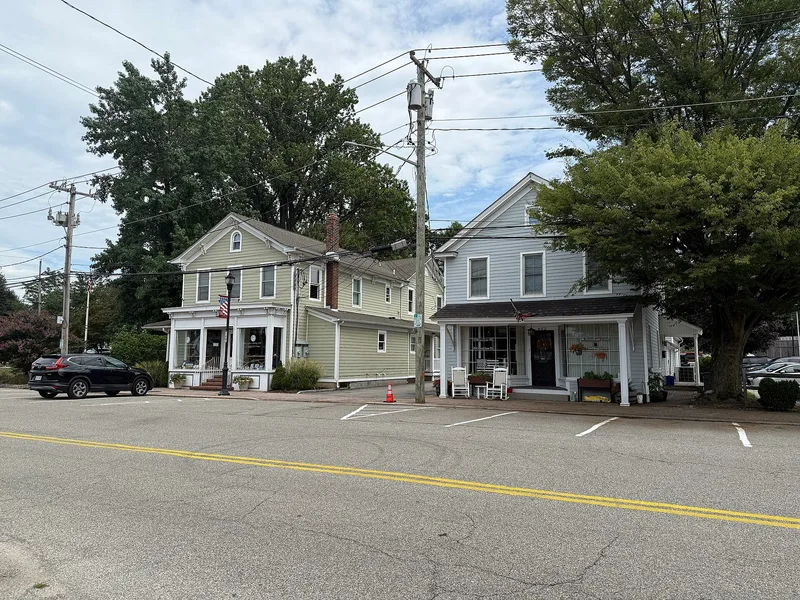
East Williston Village Historic District preserves the older center of a small Long Island village about twenty-five miles east of New York City. It covers roughly seven acres along East Williston Avenue and around Station Plaza, and includes houses, carriage barns, two frame commercial buildings, a brick railroad station, a 1925 Gothic Revival church and the Village Green Park. The oldest building is the Willis farmhouse, built in the early nineteenth century and doubled in size in the 1880s. Most other buildings date from 1878 to 1925 and are wood-frame houses with carved brackets, porches and decorative shingling in Italianate-influenced styles, plus two Colonial Revival houses. The district matters because it records how the arrival of the Long Island Railroad in the 1860s turned a farming settlement into a growing suburban village with industry, shops and homes. Dense modern housing now surrounds it, which makes the surviving historic core stand out.
Machine-generated summary. This summary was generated by a language model from the official nomination document and has not been reviewed line by line by an editor. It may contain errors. Check the source document before relying on any detail. Source: nomination document (PDF) · catalog entry. Generated October 2026 (model claude-sonnet-5-5, prompt v1.0-2026-10-29).
| Period of significance | c. 1800-1925 |
|---|---|
| Styles | Victorian Italianate and Gothic idioms, Eastlake, Colonial Revival, and Gothic Revival |
| Areas of significance | Exploration/Settlement, Architecture |
| Acreage | 7 |
| Boundary source | NPS cultural-resource GIS polygon |
| Full listing page | East Williston Village Historic District (property record) |
What listing means for this property
This is a historic district. Buildings within its boundary are either contributing (they add to the district's significance) or non-contributing. Owners of contributing income-producing buildings can claim the 20% federal rehabilitation tax credit; homeowners should look at state credits. National Register districts impose no design review by themselves; a local historic district ordinance, if one exists, does (the difference explained).
General information, not legal or tax advice. Rules change; confirm with your State Historic Preservation Office or a qualified adviser.