East Side Historic District

Why it's listed
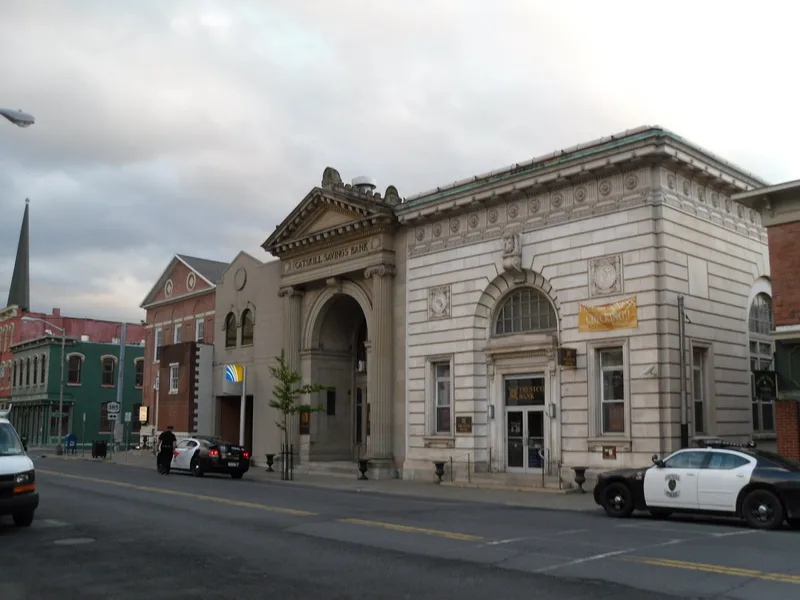
East Side Historic District covers the eastern part of Catskill, a Hudson River village and the Greene County seat. It lies between Catskill Creek and the river and includes about five hundred commercial, residential, governmental and religious buildings. Main Street runs parallel to the creek and holds stores, apartments, banks, churches, firehouses and the county government complex. Residential streets climb the hillside, and larger homes built by merchants, bankers and lawyers sit on the level hilltop. Along Water Street stand brick warehouses, former mills and old frame buildings once used by a night-boat line. Brick is the main commercial material, wood frame predominates in housing, and local limestone often forms foundations. Because few modern buildings intrude, the nineteenth-century character remains strong. The northern end includes the Thomas Cole House, a National Historic Landmark. A later documentation update lists 530 contributing buildings and 48 noncontributing buildings, and sets the period of significance at c1797 to c1930.
Machine-generated summary. This summary was generated by a language model from the official nomination document and has not been reviewed line by line by an editor. It may contain errors. Check the source document before relying on any detail. Source: nomination document (PDF) · catalog entry. Generated October 2026 (model claude-sonnet-5-5, prompt v1.0-2026-10-29).
| Period of significance | c1797-c1930 |
|---|---|
| Styles | Varied nineteenth-century types, including Colonial Revival houses on upper Spring Street |
| Areas of significance | Commerce, Exploration/Settlement, Architecture |
| Acreage | 200 |
| Boundary source | NPS cultural-resource GIS polygon |
| Full listing page | East Side Historic District (property record) |
What listing means for this property
This is a historic district. Buildings within its boundary are either contributing (they add to the district's significance) or non-contributing. Owners of contributing income-producing buildings can claim the 20% federal rehabilitation tax credit; homeowners should look at state credits. National Register districts impose no design review by themselves; a local historic district ordinance, if one exists, does (the difference explained).
General information, not legal or tax advice. Rules change; confirm with your State Historic Preservation Office or a qualified adviser.