East Side Historic District

Why it's listed
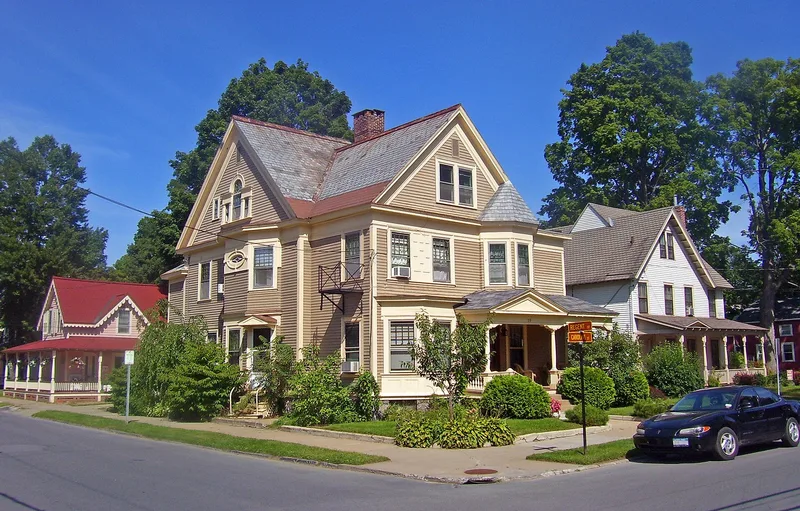
East of Broadway in Saratoga Springs lies a residential neighborhood of about 400 buildings on tree-lined streets laid out in a grid. Most date from the 1830s to the early twentieth century and show a wide run of styles, from Federal and Greek Revival through Italianate, Second Empire and Queen Anne to Colonial Revival, Tudor and Bungalow. Clapboard and brick are the main materials, and only fifteen buildings do not contribute to the district's character. The area was developed by merchant families who prospered as the city grew into a nationally known health spa and seasonal resort. Hotel and spa owners, retailers, mill owners and builders lived here in year-round homes somewhat more modest than those on Union Avenue and North Broadway. Architects including R. Newton Brezee, who designed 24 houses here, and Isaac Perry, who designed the State Armory, worked in the district. The original Skidmore College campus buildings near Union, Regent, Spring and Circular Streets are also included.
Machine-generated summary. This summary was generated by a language model from the official nomination document and has not been reviewed line by line by an editor. It may contain errors. Check the source document before relying on any detail. Source: nomination document (PDF) · catalog entry. Generated October 2026 (model claude-sonnet-5-5, prompt v1.0-2026-10-29).
| Styles | Federal, Greek Revival, Gothic Revival, Italianate, Second Empire, Queen Anne, Colonial Revival, Tudor and Bungalow styles |
|---|---|
| Areas of significance | Architecture |
| Acreage | 114 |
| Boundary source | NPS cultural-resource GIS polygon |
| Full listing page | East Side Historic District (property record) |
What listing means for this property
This is a historic district. Buildings within its boundary are either contributing (they add to the district's significance) or non-contributing. Owners of contributing income-producing buildings can claim the 20% federal rehabilitation tax credit; homeowners should look at state credits. National Register districts impose no design review by themselves; a local historic district ordinance, if one exists, does (the difference explained).
General information, not legal or tax advice. Rules change; confirm with your State Historic Preservation Office or a qualified adviser.