East Shore Road Historic District

Why it's listed
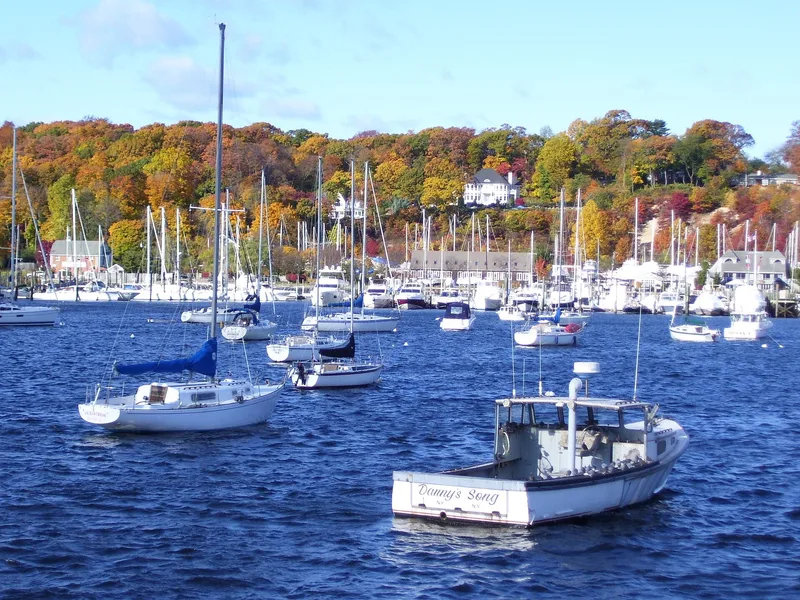
East Shore Road runs along the east bank of Huntington Harbor in Halesite, a narrow, winding lane with steep wooded banks on one side and the water on the other. The district along it holds twenty buildings and a town park, spanning the mid-eighteenth century to 1926. Most of the houses were built between 1860 and 1900 for workers in nearby commercial and water-related businesses. They are modest two-story, three-bay shingle and clapboard dwellings with limited ornament such as bargeboards, wrap-around porches and exposed rafter ends. Three earlier houses, dated about 1800, 1830 and 1850, preserve settlement-period forms despite later additions. The district also includes the site of the Brown Brothers Pottery Works, now parkland, whose archeological potential has not been investigated. A 1916 garage and servants' quarters, the only remnant of a large estate, and a 1926 Colonial Revival house mark later development. The group is valued as a rare, largely intact working-class neighborhood in Huntington.
Machine-generated summary. This summary was generated by a language model from the official nomination document and has not been reviewed line by line by an editor. It may contain errors. Check the source document before relying on any detail. Source: nomination document (PDF) · catalog entry. Generated October 2026 (model claude-sonnet-5-5, prompt v1.0-2026-10-29).
| Styles | Vernacular working-class Victorian-era dwellings with modest picturesque details; settlement-period houses; Colonial Revival (Ingersoll House, 1926) |
|---|---|
| Areas of significance | Exploration/Settlement, Architecture |
| Acreage | 12 |
| Boundary source | NPS cultural-resource GIS polygon |
| Full listing page | East Shore Road Historic District (property record) |
What listing means for this property
This is a historic district. Buildings within its boundary are either contributing (they add to the district's significance) or non-contributing. Owners of contributing income-producing buildings can claim the 20% federal rehabilitation tax credit; homeowners should look at state credits. National Register districts impose no design review by themselves; a local historic district ordinance, if one exists, does (the difference explained).
General information, not legal or tax advice. Rules change; confirm with your State Historic Preservation Office or a qualified adviser.